- Home
- >
- Travel Stories
- >
Borgo Santa Caterina: the Borgo d’Oro in the heart of Bergamo

 Written by: Mirco Cavagnera
17 July 2026
Lower Bergamo is home to some of the city’s most authentic historic districts, which developed outside the ancient walls and gradually grew around artisan workshops, churches and important trade routes.
Among them, Borgo Santa Caterina holds a special place. It is one of the neighbourhoods that best reflects both the traditional and refined character of Bergamo, thanks to its long arcaded street, historic shops and artistic heritage that extends far beyond what you might expect from a residential district.
The historic districts of Lower Bergamo: an overview
Surrounding the ancient heart of Upper Bergamo (Città Alta), the Lower Town developed over the centuries through a series of historic districts located outside the city walls, each with its own identity and commercial vocation.
Borgo San Leonardo, Borgo Palazzo, Borgo Pignolo and, of course, Borgo Santa Caterina are the best known among them. Originally created as the main access roads into the city, they gradually evolved into lively neighbourhoods where everyday life has flourished for centuries.
Compared with the others, Borgo Santa Caterina stands out for its proximity to Città Alta and for the remarkable concentration of artistic and religious landmarks along a single street, making it an almost unmissable stop for anyone visiting Bergamo.
History of Borgo Santa Caterina and its distinctive character
The origins and the name of the district
The neighbourhood originated as a vicus suburbano, originally known as Vico Plorzano, a small settlement located between the Morla and Tremana waterways and documented as early as the 12th century. Its current name came later: towards the end of the 13th century, the district was placed under the protection of Saint Catherine of Alexandria and took its name from the main street around which the settlement developed.
A major turning point came in 1390, when the construction of the Muraine, the defensive walls of the Lower Town, left the district outside the fortified perimeter, giving it a distinct identity that has remained clearly recognisable to this day.
Why Borgo Santa Caterina is important to Bergamo
Located at the entrance to the Seriana and Brembana Valleys, the district served for centuries as a mandatory passage for people and goods travelling to and from the city, encouraging the growth of inns, taverns and workshops of every kind. It is most likely thanks to this vibrant commercial past that locals still affectionately refer to it as the Borgo d’Oro (“Golden District”).
Its economic importance is matched by an exceptional artistic and religious heritage, highlighted by the presence of the Accademia Carrara, one of Italy’s finest art museums, and the Sanctuary of Our Lady of Sorrows (Santuario dell’Addolorata), whose history is linked to the miraculous event of 1602 that still plays a central role in the district’s identity.
It is no coincidence that, since 2019, Borgo Santa Caterina has been included among Italy’s Most Beautiful Villages (Borghi più belli d’Italia).
How to get to Borgo Santa Caterina
The district lies just east of Lower Bergamo, only a few minutes’ walk from Città Alta and the Sentierone, the city’s main pedestrian promenade. It is easy to reach in several ways:
- On foot, with a pleasant 10 to 15-minute walk from Città Alta through Porta Sant’Agostino, or from the centre of the Lower Town via the Sentierone and Via San Tomaso.
- By bus, using the ATB urban bus network, which stops close to Via Borgo Santa Caterina, making it convenient for visitors arriving from the railway station or other areas of the city.
- By car, keeping in mind that Via Borgo Santa Caterina is occasionally closed to traffic during major events and celebrations. On-street parking can usually be found in nearby streets such as Via Suardi and the surrounding residential roads, while several paid car parks are available close to the city centre.
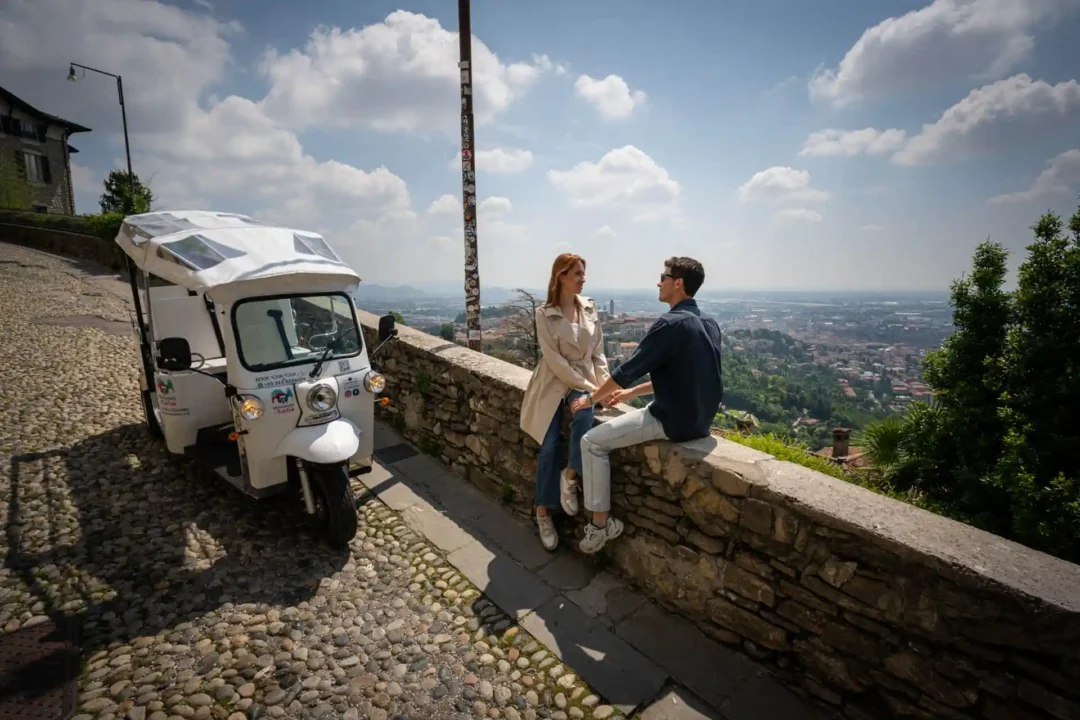
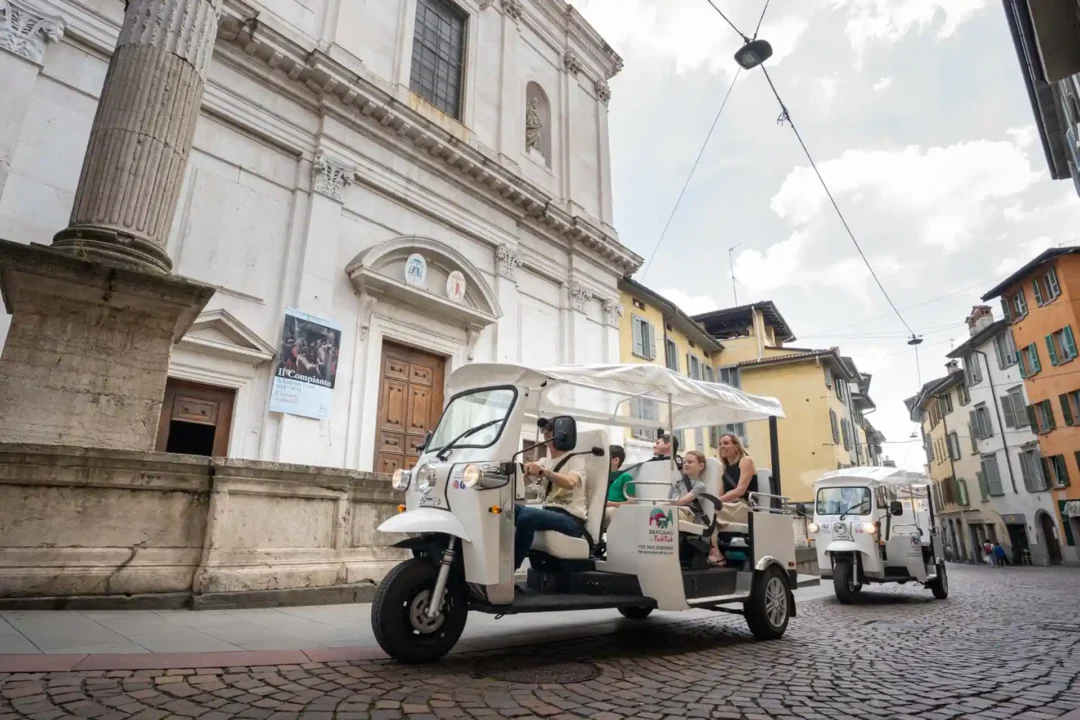
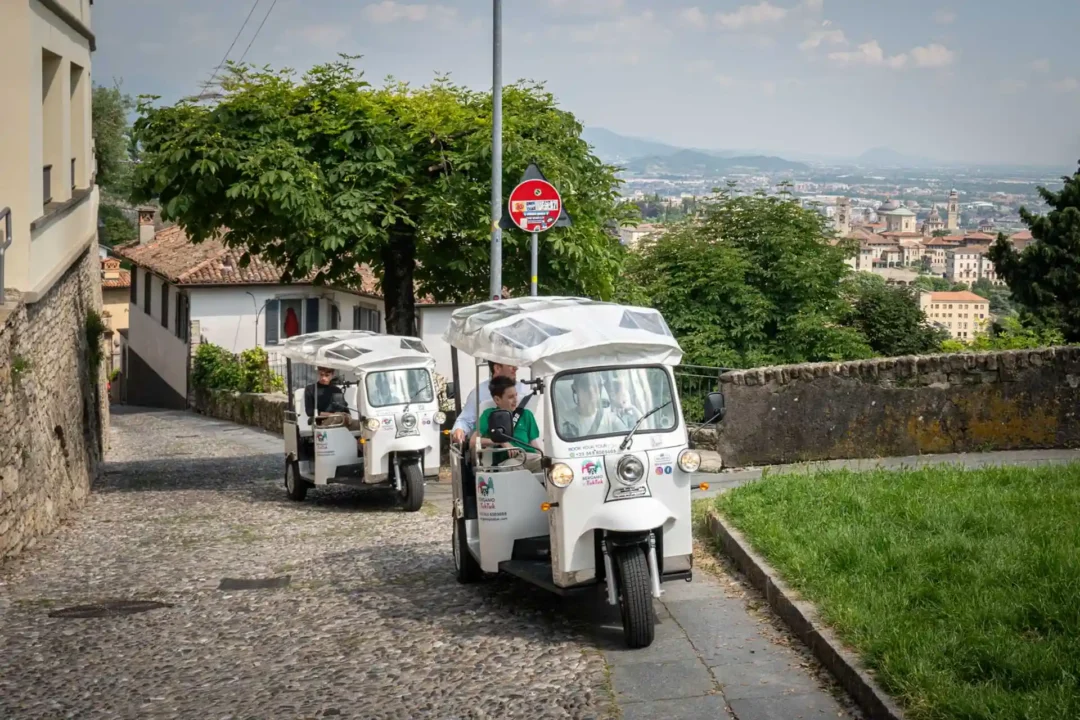
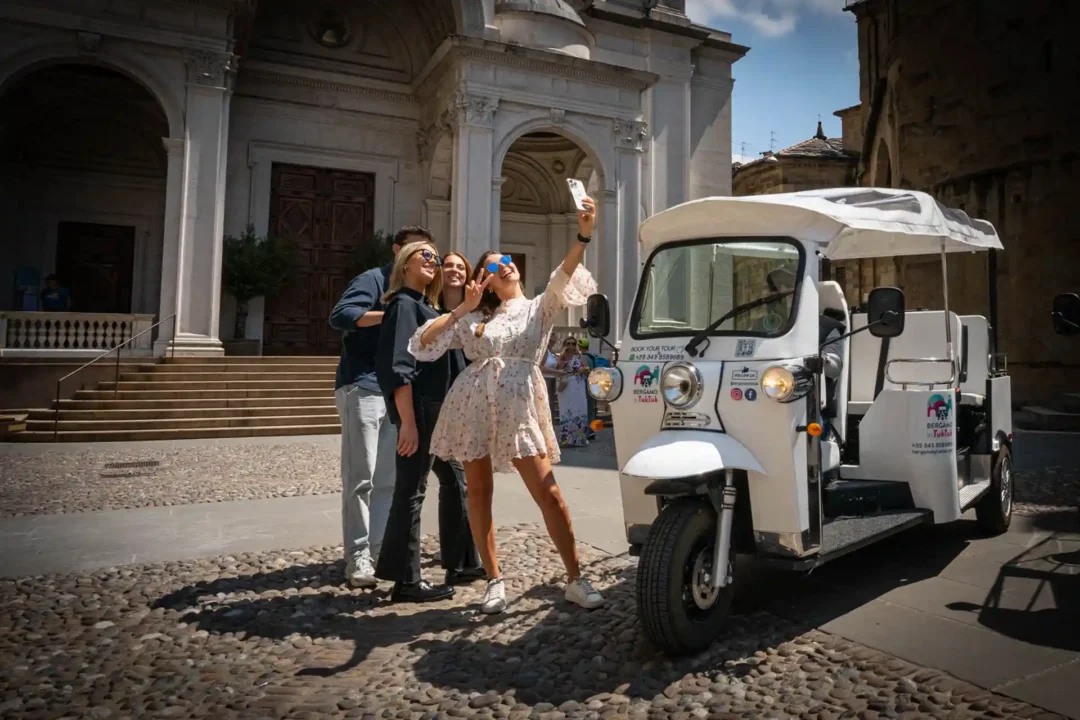
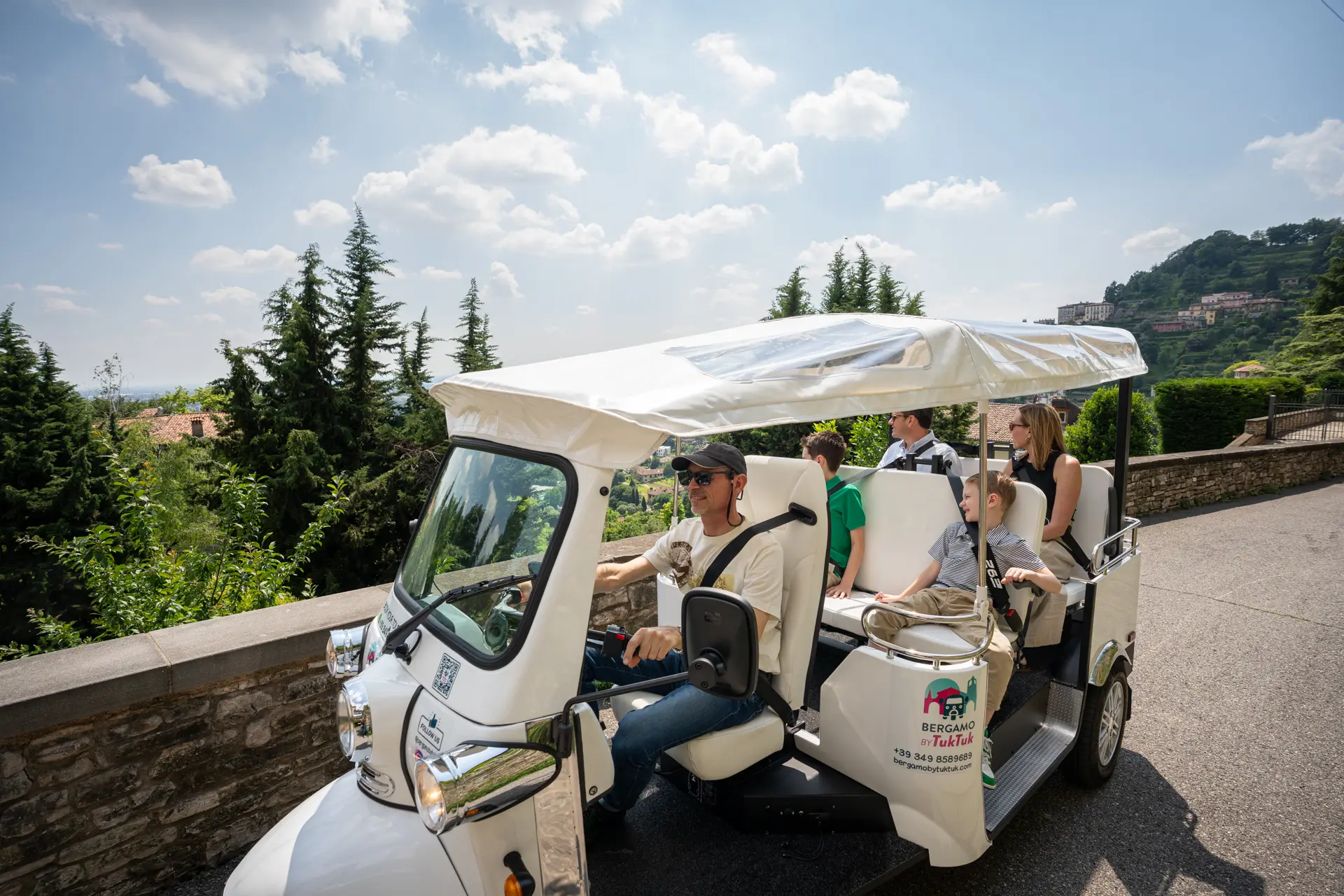
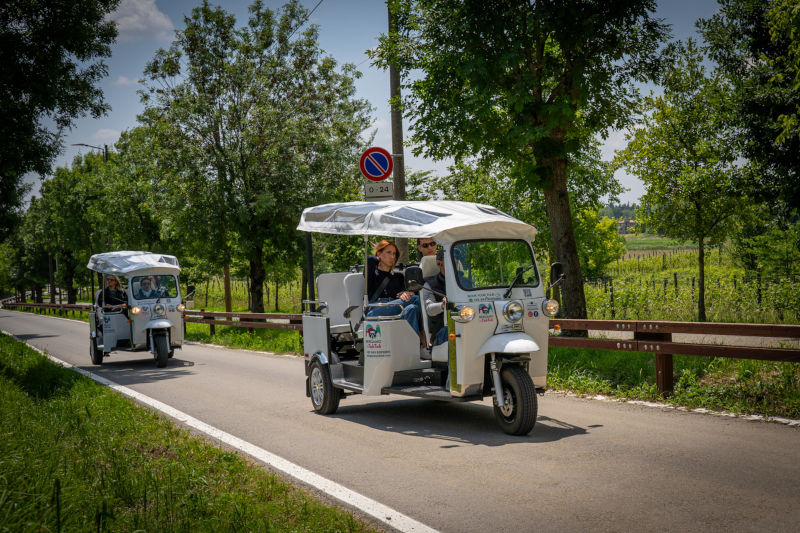
If you would rather enjoy the district without worrying about directions, you can explore Borgo Santa Caterina and the surrounding historic neighbourhoods aboard a Tuk Tuk. The Bergamo by Tuk Tuk City Tour takes you through some of Lower Bergamo’s most charming districts, combining comfort with fascinating local stories along the way.
What to see in Borgo Santa Caterina
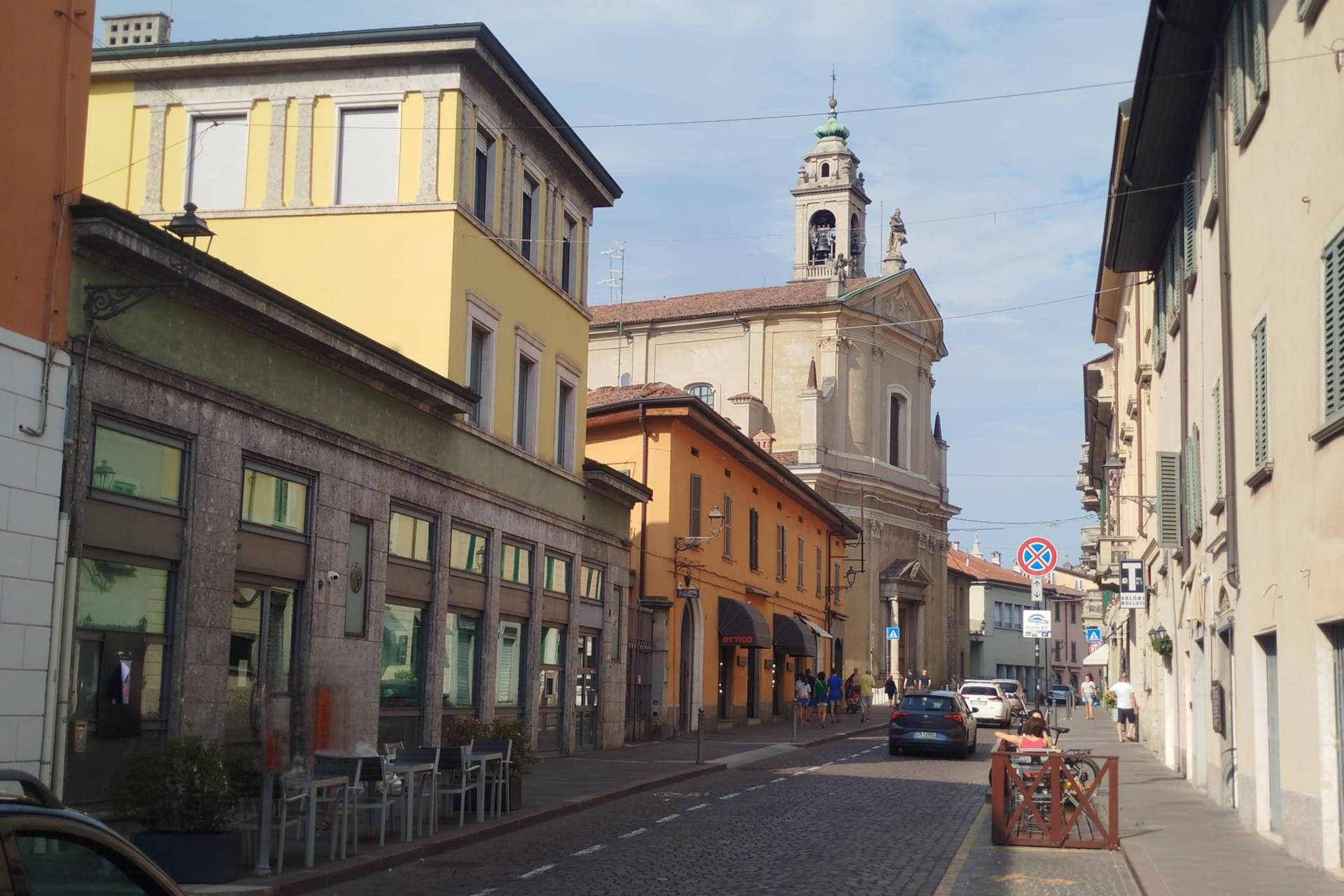
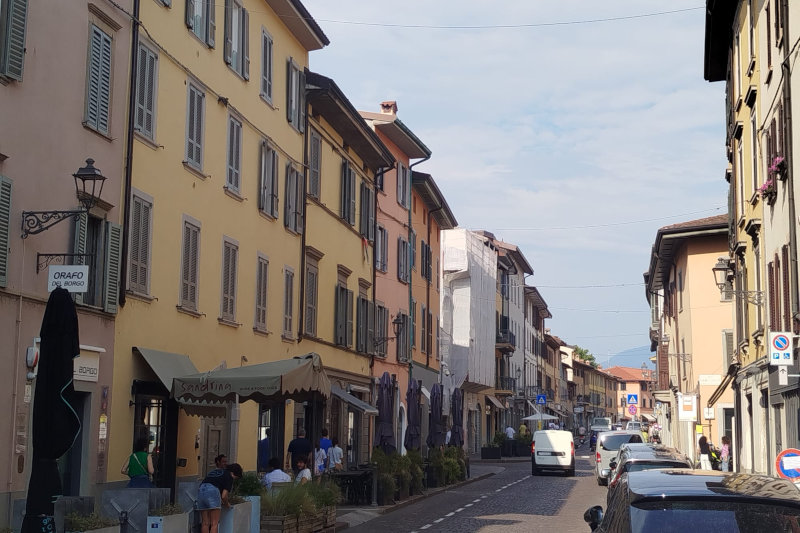
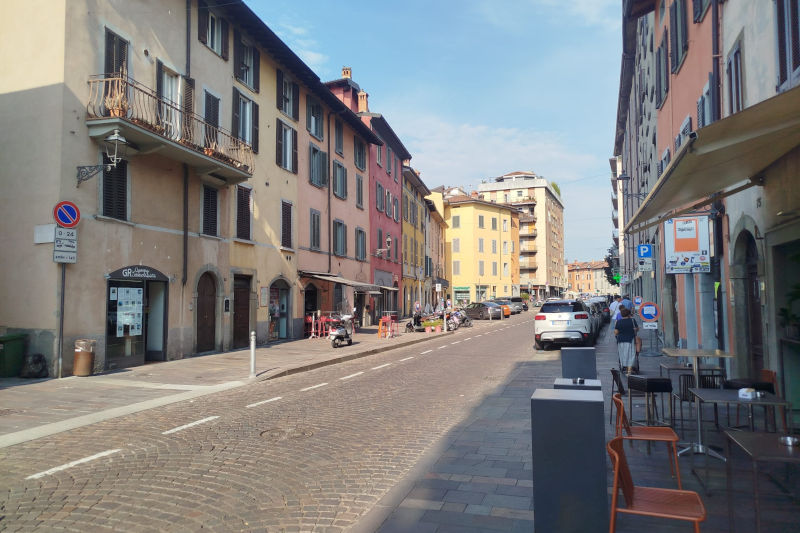
Walking along the district’s main street, lined with arcades for much of its length, you immediately experience the unique atmosphere of Borgo Santa Caterina. Colourful shop windows, artisan boutiques and elegant buildings tell the story of three centuries of urban history, blending seamlessly into one another.
Churches, sanctuaries and historic shops
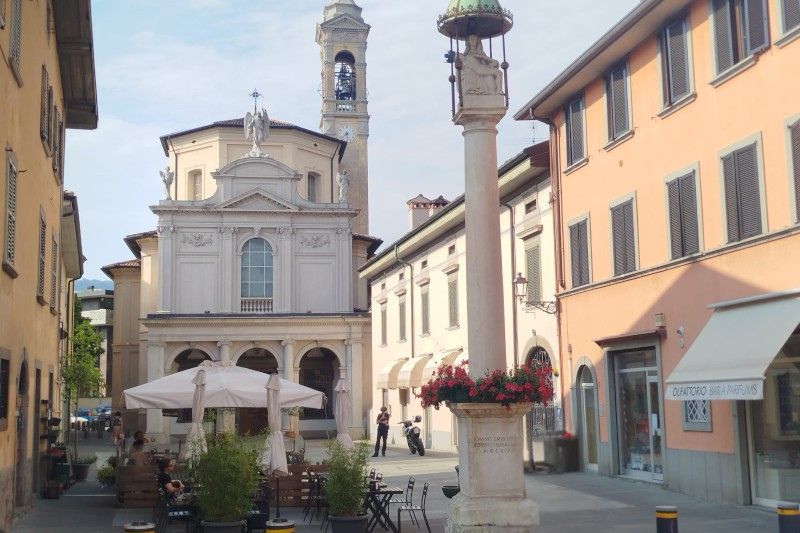
The spiritual heart of the district is the Sanctuary of Our Lady of Sorrows (Santuario della Beata Vergine Addolorata), built in 1603 following an event considered miraculous that took place the previous year, when three rays of light restored the colours of a fresco that had almost faded away over time.
A short walk away stands the parish church dedicated to Saint Catherine of Alexandria, home to three paintings portraying the saint, together with the medieval cloister of the former Celestine monastery, a peaceful and lesser-known corner of the neighbourhood.
Along the street, long-established shops, traditional bakeries and small delicatessens continue to thrive alongside modern businesses, preserving the district’s authentic character. Among them is an independent bookshop that has become a true landmark for both residents and visitors.
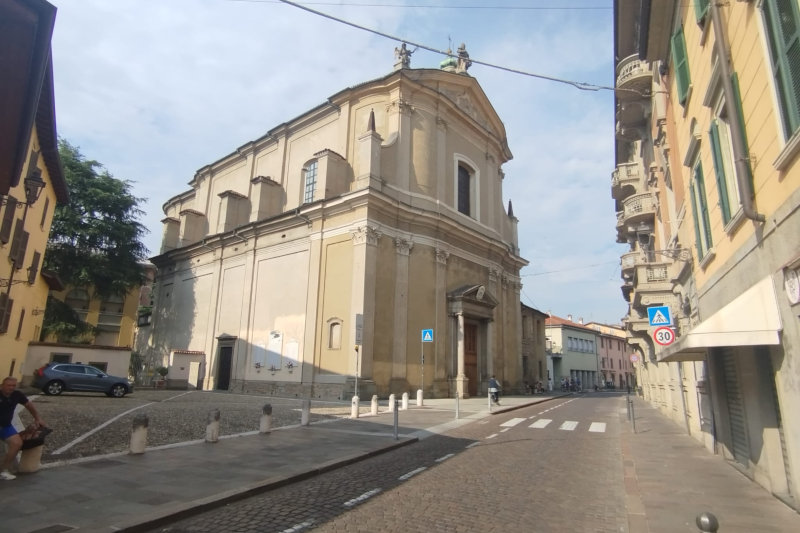
Accademia Carrara
Just a few steps from Borgo Santa Caterina stands the Accademia Carrara, one of Italy’s leading art museums and an essential stop on any visit to the district. Founded thanks to the donation of Count Giacomo Carrara’s private collection at the end of the 18th century, the museum now houses a collection of more than 1,800 works, including paintings, sculptures and drawings, although only part of it is on display.
The museum’s galleries showcase around five centuries of Italian art, from the Renaissance to the 19th century, featuring masterpieces by Mantegna, Raphael, Titian, Lorenzo Lotto, Moroni and Baschenis.
Thanks to its location, just a few minutes’ walk from the sanctuary and the district’s main street, the Accademia Carrara fits perfectly into a walking itinerary through the highlights of Borgo Santa Caterina, allowing visitors to discover some of Bergamo’s finest artistic and cultural treasures in a single outing.
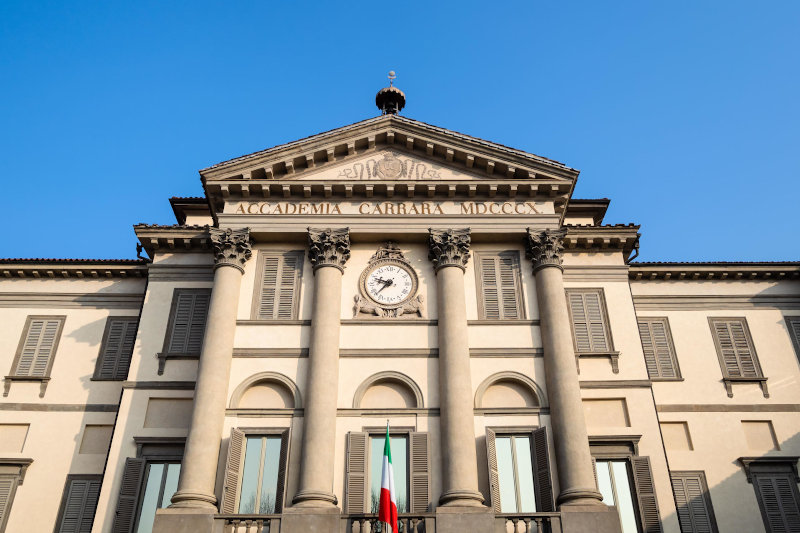
Accademia Carrara, Bergamo
Historic architecture and its connection with the stadium
Alongside its religious heritage, the district is equally fascinating for its residential architecture. Elegant 18th- and 19th-century palaces stand alongside buildings dating from the 1920s, 1930s and 1960s, creating a varied architectural landscape that changes subtly from one section of the street to the next.
The arcades, which line much of the route, provide welcome shelter on rainy days, while colourful façades and hidden courtyards reward visitors who take the time to explore beyond the obvious.
The neighbourhood also borders Bergamo Stadium, the historic home of Atalanta BC since 1928, which has recently undergone a major redevelopment. This is worth bearing in mind if you plan to visit on a match day, when the area becomes particularly lively and temporary traffic restrictions may be in place.
Parco Suardi and connections with the other historic districts
If you are looking for a green break during your visit, Parco Suardi offers a pleasant setting with tree-lined paths, benches and a children’s playground, making it one of the favourite meeting places for local families.
From here, a short walk westwards brings you to the Sentierone and Borgo San Leonardo, making it easy to include Borgo Santa Caterina in a wider itinerary exploring the historic districts of Lower Bergamo without needing a car.
The area is also undergoing an exciting phase of urban renewal, including the new home of the GAMeC (Gallery of Modern and Contemporary Art), which will be housed in the former sports arena. It is another example of how the district continues to evolve while preserving its historic identity.
To fully enjoy Borgo Santa Caterina, the Sanctuary of Our Lady of Sorrows, the Accademia Carrara and even Città Alta, it is worth setting aside at least half a day. If you prefer to focus solely on the district itself and its main attractions, one to two hours will usually be enough.
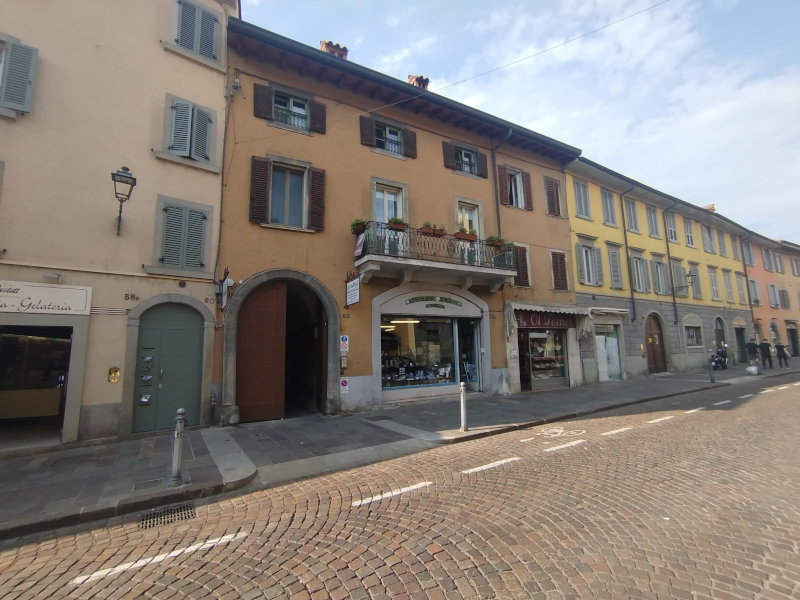
Things to do in Borgo Santa Caterina
During the day, the district comes alive with residents and visitors strolling from one shop to another. As evening falls, however, the atmosphere changes: illuminated shop signs, outdoor tables and lively streets create the perfect setting for some of the neighbourhood’s most popular events.
White Nights and themed evenings
Among the most popular events are the White Nights, organised by the Borgo Santa Caterina Merchants’ Association together with the Urban Trade District. Several times a year, the main street is closed to traffic and transformed into a vibrant venue featuring live music, shops staying open late and entertainment spread throughout the neighbourhood.
Recent editions have included different themes, ranging from classic car exhibitions to dance performances, with shows taking place at various points along the street. This approach ensures that each White Night offers a slightly different experience while maintaining the same festive atmosphere that locals and visitors look forward to every year.
Fireworks and the Feast of the Apparition
The district’s most significant celebration takes place on 18 August, during the Feast of the Apparition linked to the Sanctuary of Our Lady of Sorrows. The tradition includes a community dinner stretching along the entire street, followed by fireworks and celebrations involving the whole neighbourhood.
As this is a long-standing annual event, it is always advisable to check the official channels of the Municipality of Bergamo and the Merchants’ Association for the latest programme, as schedules and accompanying activities may vary from year to year.
Venerdì del Borgo and other seasonal events
During the summer months, the district traditionally hosts the Venerdì del Borgo (“Fridays in the Borgo”), when the main street comes alive with live music, craft markets and children’s workshops, while cafés and restaurants extend their outdoor seating onto the pavements.
As the dates change every year, it is recommended to check the updated events calendar before planning your visit.
Throughout the rest of the year, the neighbourhood also hosts smaller cultural initiatives, including temporary exhibitions, themed markets and collaborations with local institutions such as the Accademia Carrara.
Where to eat in Borgo Santa Caterina
Via Borgo Santa Caterina is one of the streets in Lower Bergamo with the highest concentration of restaurants, traditional trattorias and wine bars, offering everything from authentic Bergamasque cuisine to more contemporary dining experiences.
Here are a few places worth considering as you stroll through the district:
- Osteria al Borgo D’Oro, a restaurant housed in a historic building with stone vaulted ceilings, serving traditional Lombard cuisine focused mainly on meat dishes, alongside a selection of fish specialities. It also features a charming inner garden used for aperitifs and private events.
- Ristorante Pizzeria Vesuvio1970, founded in 1970 by Giovanni Ferrara and now run by his six children, serves authentic Neapolitan pizza together with an extensive buffet in the heart of the district.
- Enoteca Zanini, located at Via Borgo Santa Caterina 90/a, combines a wine bar and restaurant in an elegant setting with exposed brickwork and stone columns. The menu includes both meat and seafood dishes, complemented by a carefully selected wine list curated by sommelier Nicola Zanini.
- Beer Garage, a pub specialising in Italian and international craft beers, perfect for anyone looking for a relaxed atmosphere and a wide choice of beers on tap.
- Bicerì, a cosy wine bar near the beginning of the street, ideal for an aperitif or a relaxed evening with friends.
These are just a few of the many trattorias, pizzerias, cafés and restaurants lining the street, reflecting the district’s wide and varied food scene, with options to suit every time of day.
For those with a sweet tooth, Pasticceria Camponuovo, located at Via Borgo Santa Caterina 48, is a must-visit. It is part of the La Marianna group, founded by the Panattoni family.
This is one of the places where you can enjoy the famous Stracciatella gelato, the flavour created in 1961 by Enrico Panattoni at the historic Colle Aperto location, which has since become one of Bergamo’s best-known gastronomic specialities. Alongside its artisan gelato, the pastry shop also offers the brand’s signature baked goods, including traditional cakes and naturally leavened products.
Why visit Borgo Santa Caterina
Borgo Santa Caterina brings together history, art, religious heritage and everyday local life within just a few hundred metres, creating a unique atmosphere that is hard to find elsewhere in Bergamo.
It is a district that can be enjoyed during the day, while exploring the Accademia Carrara and the Sanctuary of Our Lady of Sorrows, or in the evening, when lively cafés, restaurants and outdoor terraces transform its streets into one of the city’s favourite meeting places.
Whether you arrive on foot from Città Alta, by bus or aboard a Tuk Tuk, Borgo Santa Caterina remains one of the most authentic places to discover the true spirit of Bergamo—a city that extends beyond its postcard views and reveals itself through historic shops, local traditions and a community that still proudly refers to its neighbourhood as the Borgo d’Oro.
Credits: All photographs were taken on location by the Bergamobytuktuk.com team along the tour route.
Bergamo is always worth discovering…
- The Vases Trail and the Ancient Aqueduct
- San Vigilio: Bergamo’s Balcony Over the Horizon
- A Romantic Weekend in Bergamo: Experiences to Enjoy Together
- The Sanctuary of the Blessed Virgin of the Chestnut Tree: A Hidden Gem in the Hills of Bergamo
- Shopping in Bergamo: The Best Streets, Events and Places
- Where to Park in Bergamo: A Complete Guide for Stress-Free Parking
Itineraries, experiences and a local soul: this is the Bergamo that we want to tell you about!