- Home
- >
- Travel Stories
- >
Museo Bernareggi in Bergamo: everything You need to know before your visit

23 June 2026
The Museo Bernareggi is one of the most significant places for anyone wishing to explore sacred art and the religious history of Bergamo. Managed by the Fondazione Adriano Bernareggi, the pastoral body of the Diocese, it is not a traditional museum in the classical sense of the term: it is a museum spread across four distinct sites in the heart of Città Alta, each with its own identity and heritage to discover.
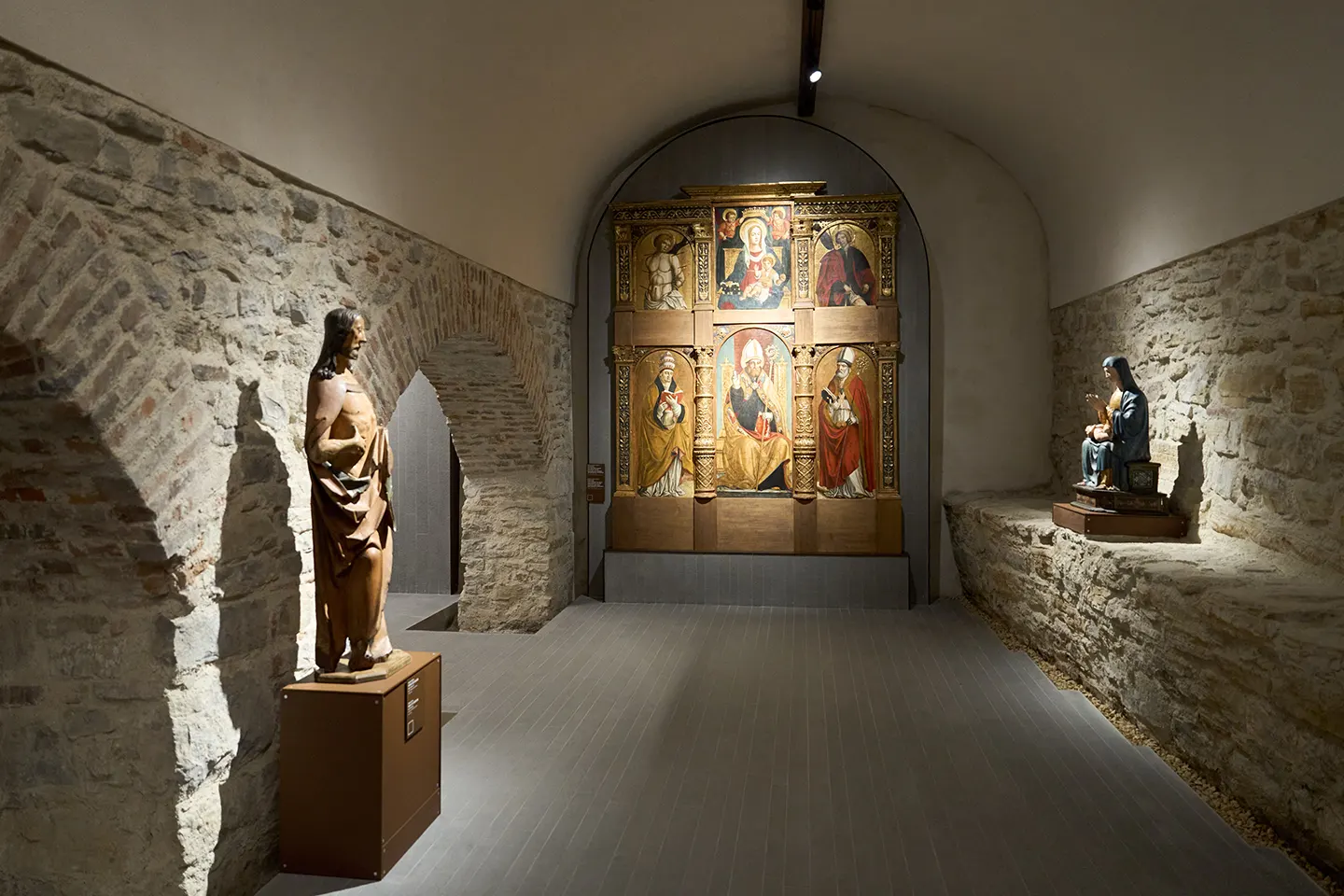
Paintings by Lorenzo Lotto and Giovanni Battista Moroni, Renaissance frescoes, and Roman domus brought back to light after centuries: entering the Adriano Bernareggi Diocesan Museum means travelling through overlapping layers of history, where every stone has a story to tell.
Where is Museo Bernareggi located in Bergamo?
The Bernareggi Diocesan Museum is located entirely within Città Alta, the historic heart of Bergamo. Its main site – the Palazzo Vescovile with the Aula Picta – is located in Piazza Duomo, just a short walk from the Basilica of Santa Maria Maggiore and to the right of the entrance to the Colleoni Chapel.
The other three sites (Cathedral and Ancient Cathedral, Baptistery, and Oratory of San Lupo) are all situated within the same area, a short distance from one another.
What to see at Museo Bernareggi: collections and sites
The cultural project of the Bernareggi Diocesan Museum is based on the idea that sacred art is not merely preservation, but a living testimony to the relationship between the Christian faith and the history of the Bergamo area.
The exhibition route spans centuries of artistic production – from Late Roman archaeology to contemporary art – following a narrative thread that connects each work to the religious, social and cultural context in which it was created.
The ticket is valid for the entire day of purchase and the following day; therefore, visitors have plenty of time to explore all four sites at a relaxed pace.
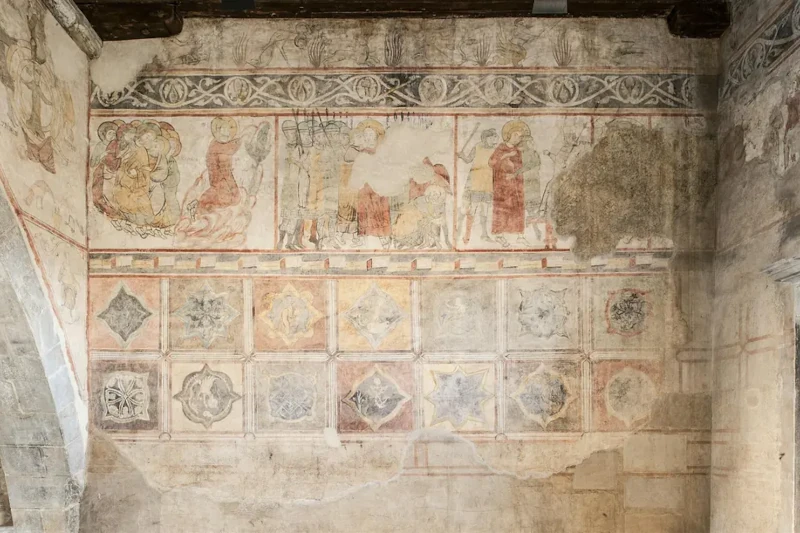
Medieval frescoes in the Aula Picta of Museo Bernareggi in Bergamo
Palazzo Vescovile and Aula Picta
This is the heart of the new Museo Bernareggi, reopened after an extensive restoration project that revealed exceptional historical layers: remains of Roman domus, medieval walls and Renaissance frescoes that had remained hidden for centuries.
The Aula Picta is the most evocative space of the entire museum route: a frescoed hall that bears witness to the period of greatest splendour of episcopal power in Bergamo.
Walking across floors that cover Roman foundations while your gaze rises toward fifteenth-century decorations is an experience that few museums in Italy can offer with the same richness and depth.
Cathedral and Early Christian Ancient Cathedral
Beneath the present-day Cathedral of Saint Alexander Martyr lies one of Bergamo’s most extraordinary archaeological sites: the remains of a 1st-century AD Roman domus, the foundations of an early Christian basilica, and traces of a later Romanesque cathedral.
This historical palimpsest, where every layer tells a different chapter in the city’s history, offers a rare and tangible insight into how Christian Bergamo developed on top of Roman Bergamo. The route is complemented by a multimedia room that helps visitors place the archaeological finds in context.
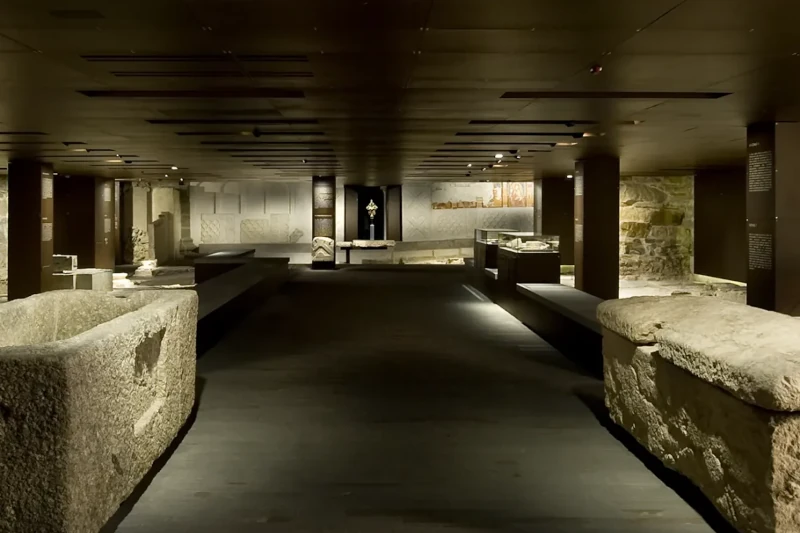
Archaeological area of the Ancient Cathedral within the Museo Bernareggi route in Bergamo
The Baptistery
The Cathedral Baptistery is one of the most intimate and peaceful spaces in the museum. Architecture and liturgy come together in a place that still retains its original function – it continues to host parish baptisms – and is open to visitors during scheduled opening hours (except during ceremonies).
A combined visit including only the multimedia room is also available with a reduced ticket costing €2.
The Oratory of San Lupo
Hidden among the historic buildings of Borgo Pignolo, the former Oratory of San Lupo is the only one of the four sites to host contemporary art on a permanent basis.
Its Baroque and Neoclassical architecture provides the backdrop for installations and artworks that engage in dialogue with the sacred space, reflecting the museum’s commitment not only to preserving the past but also to fostering an ongoing conversation with contemporary art. Contemporary artists continue to find inspiration in this unique location, tucked away among the city’s narrow streets.
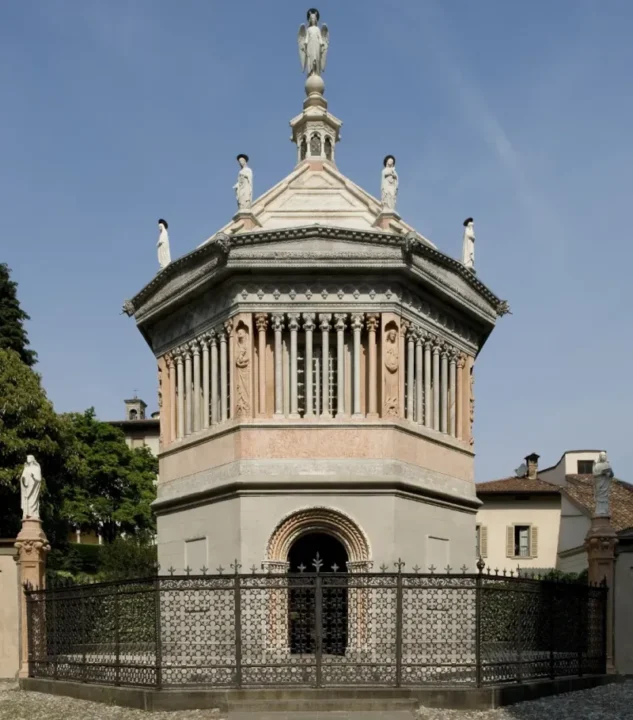
Bergamo Baptistery in Piazza Duomo
Historic collections and must-see works
The original core of the collection – assembled by Bishop Adriano Bernareggi from churches throughout the diocese – includes paintings, sculptures, liturgical artefacts and works originating from various areas of the Bergamo region.
The collection allows visitors to follow the evolution of local sacred art from the late Middle Ages to the modern era, highlighting the connection between artistic production, popular devotion and community life.
Among the artists most strongly represented in the collection, and most closely linked to Bergamo’s artistic history, particular attention should be paid to:
- Lorenzo Lotto, a leading figure of the Italian Renaissance, whose works testify to the artist’s deep connection with Bergamo and its territory
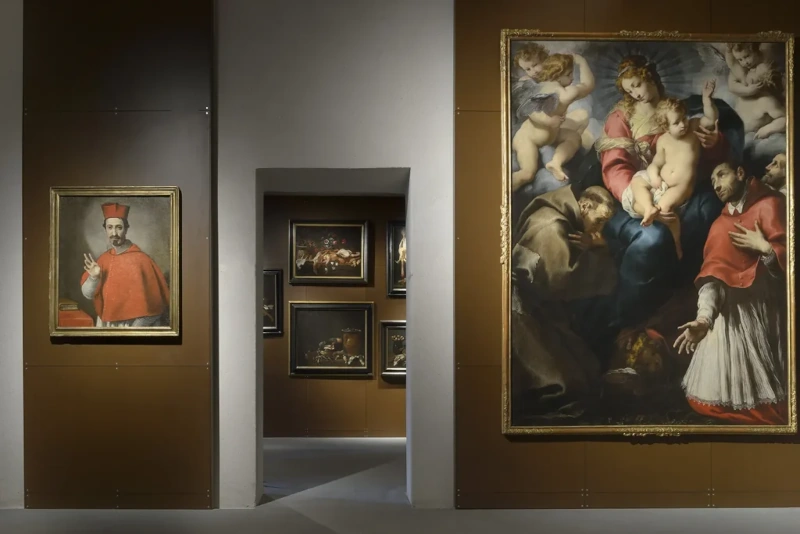
- Giovanni Battista Moroni, renowned for his realistic portraits and his extraordinary ability to capture the character of sixteenth-century Lombard society
- Evaristo Baschenis, celebrated for his refined still lifes featuring musical instruments, among the most original expressions of seventeenth-century Bergamo painting
- Alvise Vivarini, Daniele Crespi and other Lombard and Venetian masters who document the artistic connections between Bergamo, Venice and Milan across the centuries
- Liturgical textiles, reliquaries, sacred goldsmith works, embroidery and polychrome wooden sculptures, valuable testimonies to the religious and artisanal traditions of the Diocese of Bergamo
More than a simple collection of artworks, the museum route tells how art accompanied the religious and cultural history of the region.
For this reason, the visit is particularly appealing to enthusiasts of sacred art, the Lombard Renaissance and local history, as well as anyone wishing to gain a deeper understanding of Bergamo’s historical identity through its artistic heritage.
A complete visit to all four sites generally takes between 2 and 3 hours. Visitors with less time can focus on the Palazzo Vescovile and the Aula Picta, the heart of the new museum route, or choose the sites that best match their interests.
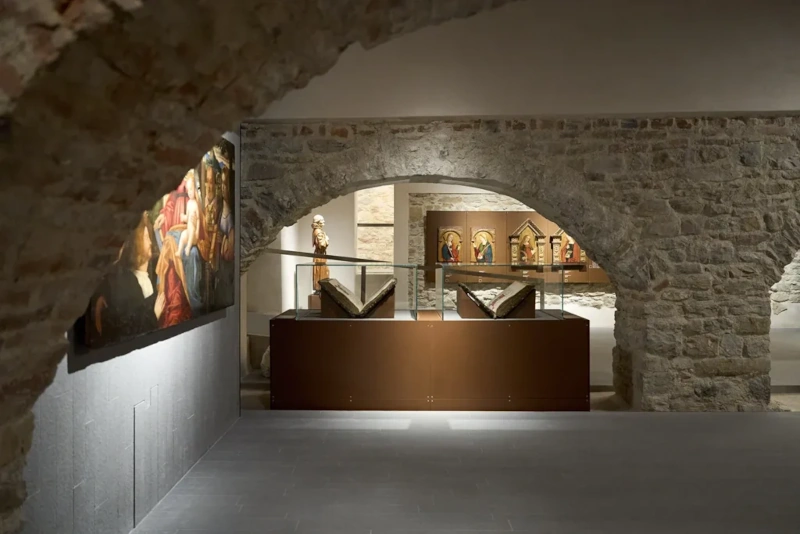
Exhibitions and events: what’s on
The museum regularly hosts temporary activities that enrich the permanent exhibition route. At the time of writing, the museum is hosting the event “In the Footsteps of Lorenzo Lotto”, scheduled from 11 June to 2 July 2026.
To check the latest programme and activities for schools, parish groups and youth organisations, visitors are encouraged to consult the official website.
How much does a ticket to Museo Bernareggi cost?
The museum offers several admission options, verified on the official website. Every ticket purchased is valid on the day of first use and the following day, allowing visitors to spread their visit over two days at no additional cost.
Standard and Reduced Tickets:
- Full ticket: €10
- Reduced ticket €5: students aged 6 to under 26; groups of 12 to 25 people; members of law enforcement; holders of FAI or Italia Nostra membership cards
- Reduced ticket €2: families consisting of 2 adults and 2 children under the age of 6; families registered with ANFM
- Reduced ticket €4: groups accompanied by a tourist guide (min. 12, max. 25 people)
- Reduced ticket for parish groups (min. 12, max. 25 people): €18
Partial Admission Tickets:
- Baptistery and immersive multimedia room only: €2
- Aula Picta only: €3
- Ancient Cathedral only: €3
Free Admission:
Children up to 6 years old, people with disabilities and one accompanying person, teachers visiting with students, catechists accompanying pastoral groups, priests and members of religious orders, tourist guides, journalists, holders of an AMEI membership card and Abbonamento Musei Lombardia cardholders are admitted free of charge.
Guided Tours:
- 60 minutes – Museum and Baptistery: €60
- 90 minutes – Museum, Baptistery and Ancient Cathedral: €80
- 120 minutes – Museum, Baptistery, Ancient Cathedral and Cathedral of Saint Alexander Martyr: €100
Opening hours
The opening hours of Museo Bernareggi, verified on the official website, are as follows:
- Monday, Wednesday and Thursday: from 10:00 am to 1:00 pm and from 2:00 pm to 6:00 pm
- Friday, Saturday and Sunday: from 10:00 am to 6:00 pm (continuous opening hours)
- Tuesday: closed
Last admission to all museum sites is permitted 30 minutes before closing time.
The Baptistery is not accessible during baptism ceremonies. Tickets can be purchased online through the official website via the Midaticket platform.
Curiosities and history of Museo Bernareggi: a legacy born from the vision of a bishop
To understand Museo Bernareggi, it is essential to know the man whose name it bears. Adriano Bernareggi served as Bishop of Bergamo from 1936 to 1953, a period marked by profound historical tensions and social transformations.
During those years, while visiting the parishes of the diocese, he realised that many churches housed works of art of great value, often poorly preserved and largely unknown. Rather than allowing them to fall into obscurity, he launched a systematic programme of collection and documentation, convinced that art was a living instrument of evangelisation and a way of rooting faith within contemporary culture.
This was not simply a matter of collecting art: as early as 1921, Bernareggi had founded, together with Giuseppe Polvara, the Society of Friends of Christian Art and the Beato Angelico School of Art, and had also collaborated with the journal “Arte Cristiana”.
His was a coherent cultural vision that saw sacred art as a tangible expression of the Gospel’s roots within the history of peoples. The collection he assembled between the 1930s and the 1950s still forms the founding core of the museum today.
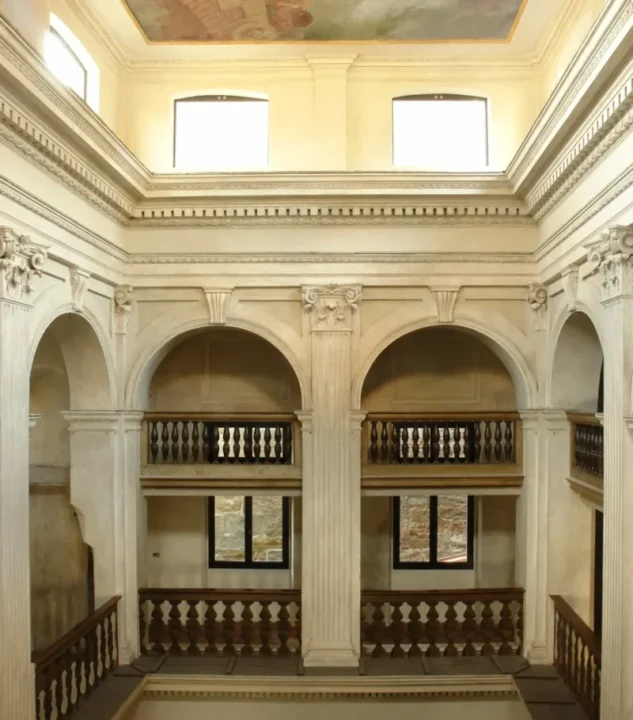
Inner courtyard of Palazzo Bassi Rathgeb, the historic home of Museo Bernareggi in Bergamo
The museum, in its original form, was housed in Casa Fogaccia in Città Alta. Its current home – the Palazzo Bassi-Rathgeb at Via Pignolo 76, a Renaissance building constructed around 1520 and attributed to Pietro Isabello – was donated to the Diocese in 1981 by Roberto Bassi Rathgeb, with the specific intention that it be used as the diocesan museum.
The building itself, with its arcaded courtyard and sixteenth-century ornamental sculptures by Donato Fantoni, is a cultural heritage asset of considerable importance.
The “New Bernareggi”
Over the years, the museum has undergone a profound transformation. Beginning in 2019, following a partnership agreement between the Fondazione Bernareggi and the University of Bergamo, a process of redesigning the exhibition spaces and visitor route was launched.
The so-called “New Bernareggi” has expanded its identity, becoming a museum spread across four different sites within Città Alta: no longer simply a container of artworks, but an itinerary through the artistic and spiritual history of the city. The site in Via Pignolo 76 remains part of the museum complex, while the centre of the project has shifted towards the Palazzo Vescovile and the sites around Piazza Duomo.
For up-to-date information regarding the museum’s management, visitors are advised to contact the Fondazione Bernareggi directly (info@fondazionebernareggi.it, tel. +39 035 278 155).
How to Get to Museo Adriano Bernareggi
There are several practical ways to reach Città Alta:
- Funicular railway: the quickest and most characteristic way to reach the upper town. The lower station is located on Via Vittorio Emanuele II, while the upper station exits directly into Piazza Mercato delle Scarpe, just a few minutes’ walk from the museum.
- Bus: Route 1 from the railway station and Route 3 from Via Galileo Ferraris (from the Monterosso district) both stop at Colle Aperto, the pedestrian gateway to Città Alta.
- On foot: visitors arriving from the lower town can walk through the streets of Città Bassa and climb through the surrounding hills; the journey takes approximately 20–30 minutes and is recommended for those who wish to enjoy the views along the way.
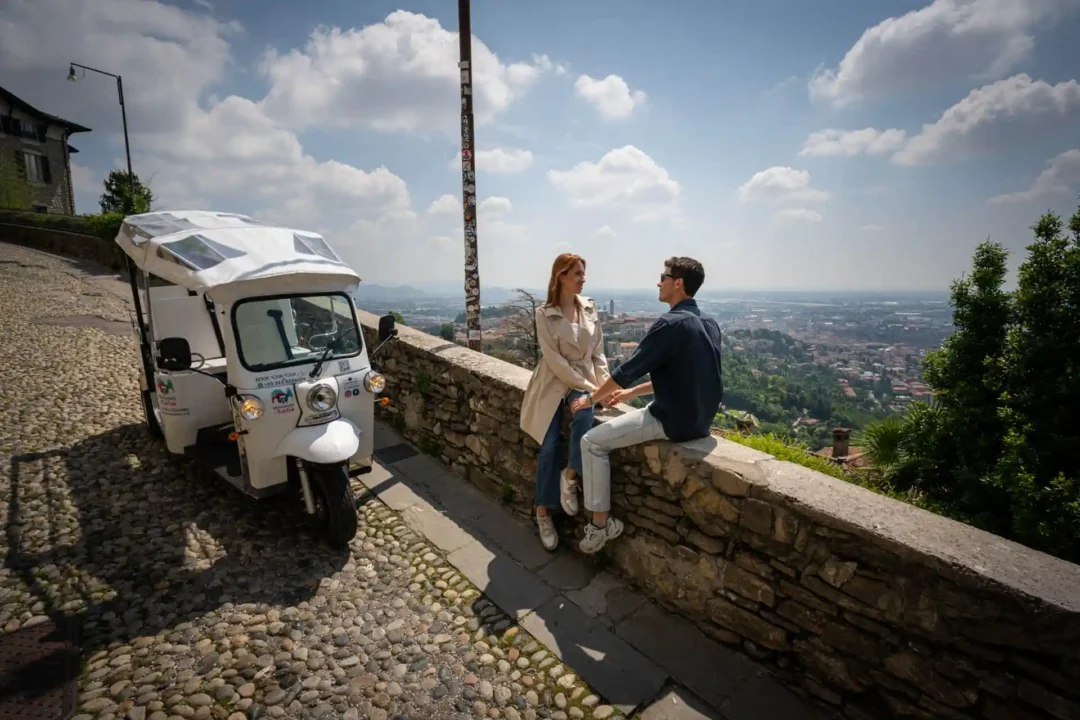
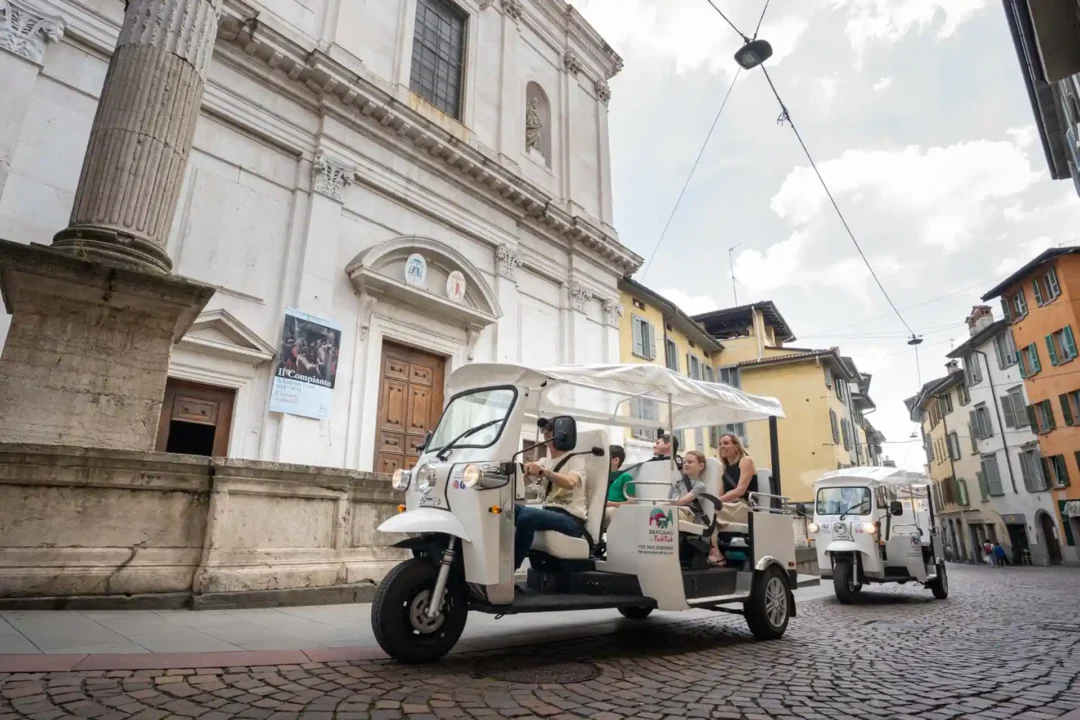
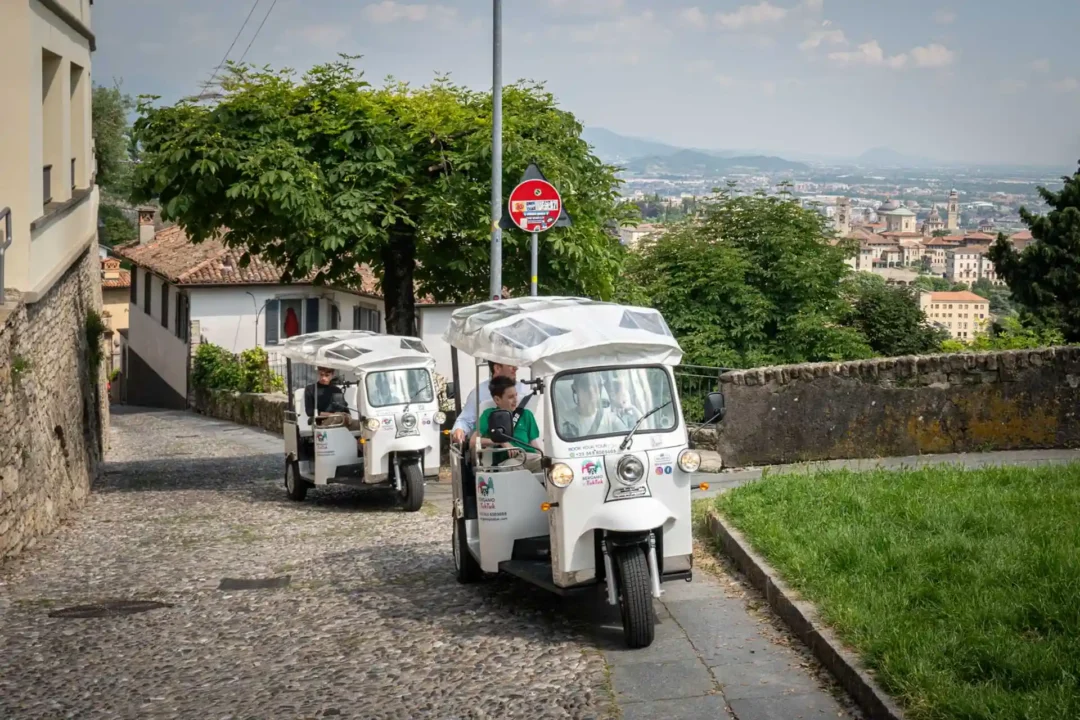
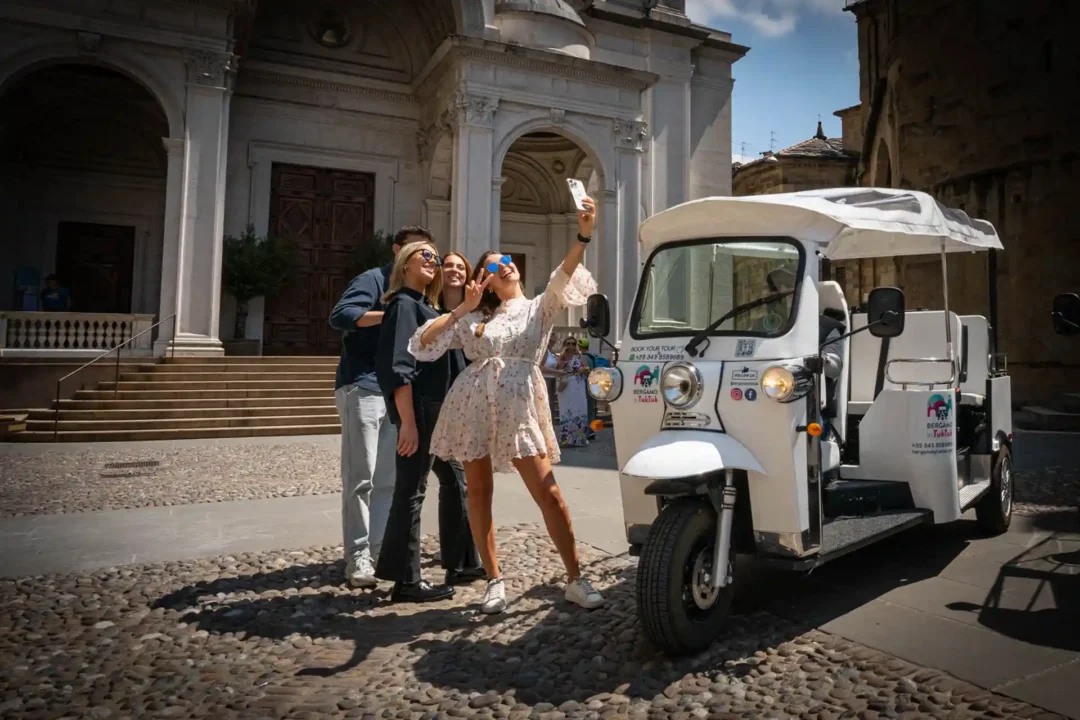
Visitors exploring Bergamo with Bergamo by TukTuk – tuk tuk tours that connect the city’s main attractions – can easily include Museo Bernareggi in their itinerary, stopping in Piazza Duomo after visiting the Colleoni Chapel or the Baptistery.
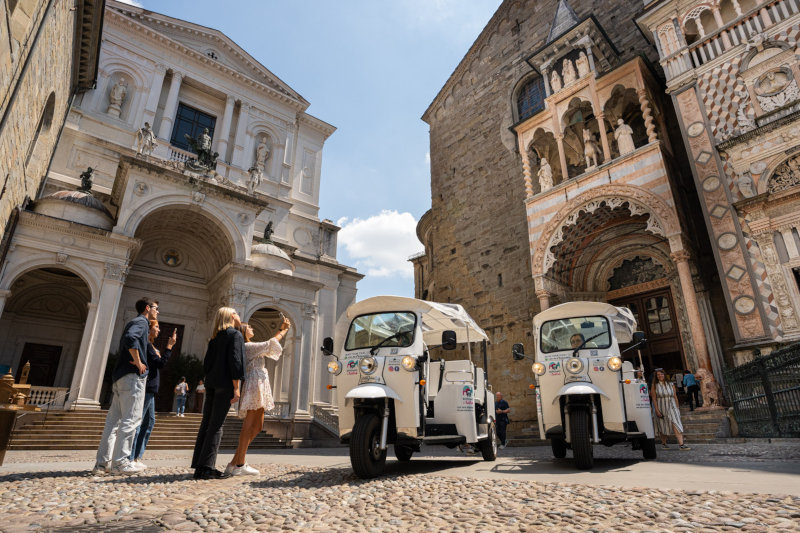
Tuk Tuk Tour in Bergamo Alta with Bergamo By Tuk Tuk
The museum’s location in Piazza Duomo, within the walls of Città Alta, makes it easy to include in a full day of sightseeing in the city.
Nearby are some of Bergamo’s most important landmarks: the Basilica of Santa Maria Maggiore with its Romanesque façade, the Colleoni Chapel with frescoes by Giambattista Tiepolo, the medieval Baptistery and the Cathedral of Saint Alexander. Anyone wishing to explore the relationship between art and faith in Bergamo will find Museo Bernareggi to be the ideal connecting point between these sites.
Descending towards Città Bassa, Borgo Pignolo – home to the Oratory of San Lupo, one of the museum’s four sites – is one of the most interesting streets along the pedestrian route linking the upper and lower towns, lined with noble palaces and historic churches.
A morning spent in Città Alta among museums and squares, followed by an afternoon exploring nineteenth-century Bergamo with the Gallerie d’Italia or the Accademia Carrara, is an itinerary well worth planning.
Must-See Attractions in Bergamo
- The Lazzaretto of Bergamo: Life Beyond Life for Over 600 Years
- GAMeC, Bergamo’s Centre of Cultural Excellence
- Sanctuary of the Blessed Virgin of the Chestnut Tree: A Hidden Treasure Among the Hills of Bergamo
- The Colleoni Chapel in Bergamo
- Accademia Carrara in Bergamo: Art and Culture for Over 200 Years
Credits: All images are sourced from www.ilbernareggi.it.
Itineraries, experiences and a local soul: this is the Bergamo that we want to tell you about!