- Home
- >
- Travel Stories
- >
What to See in Bergamo Alta: must-see landmarks, hidden corners, and atmospheres to experience

08 May 2026
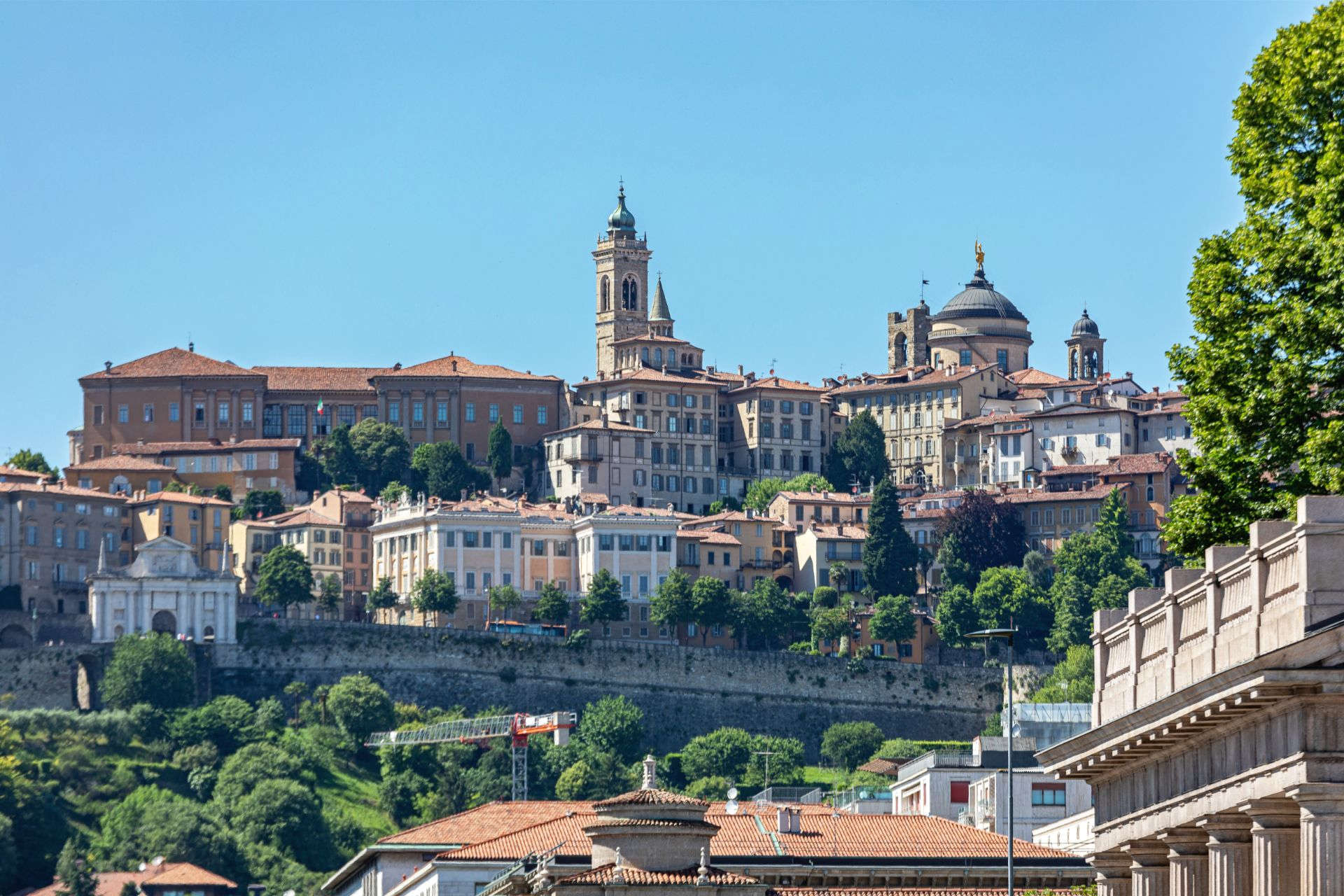
Bergamo Alta is one of the best-preserved walled cities in Italy, declared a UNESCO World Heritage Site in 2017 together with other Venetian Walls.
Enclosed within its 16th-century walls, the Upper Town offers an extraordinary concentration of art, history, and medieval and Renaissance architecture.
This guide gathers everything worth seeing in Bergamo Alta, organized into a practical itinerary that allows visitors to discover the must-see landmarks without getting lost among the streets of the historic center.
What to See in Bergamo Alta: the main attractions
In the heart of the Upper Town lies most of Bergamo’s historical and artistic attractions, all easily reachable on foot within just a few hours. Here are the main places not to miss during a first visit.
Piazza Vecchia: the Heart of the Upper Town
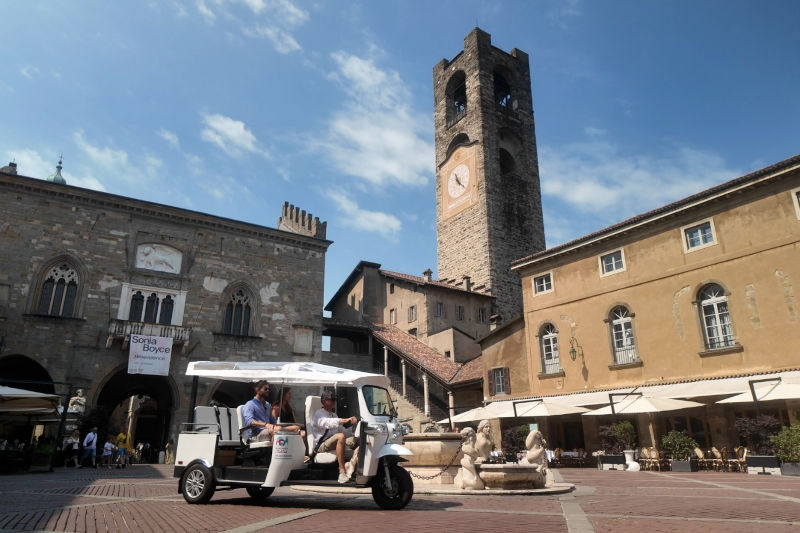
Piazza Vecchia has been the center of city life for centuries and is one of the most iconic places in Bergamo Alta. Surrounded by historic buildings, the square opens with a harmonious geometry that immediately captures attention.
At its center stands the Contarini Fountain (1780), a gift from the podestà of the Republic of Venice to the city.
It is a space that changes character throughout the day, from the quiet atmosphere of the morning to the livelier rhythm of the afternoon.
Looking at it from the entrance, some elements immediately stand out and help visitors orient themselves:
- the Palazzo della Ragione (12th century), with its Gothic loggia overlooking the square and medieval arcades visible on the ground floor
- the Palazzo Nuovo, located behind the former and home to the Angelo Mai Library
- the Contarini Fountain, the square’s central focal point and visual landmark
- the Campanone Tower, 52 meters high, which closes the square on the northern side
The tower, in particular, rings its 100 chimes every evening at 10:00 PM, a tradition recalling the closing of the city gates. It is well worth climbing to the top for an open view over rooftops and bell towers.
Piazza Vecchia is the ideal starting point for any visit to Bergamo Alta: from here all the main routes branch out, and the city’s most important attractions can be reached within minutes on foot.
Basilica of Santa Maria Maggiore and Colleoni Chapel
Adjacent to Piazza Vecchia, Piazza del Duomo is home to two buildings of great historical and artistic importance. The Basilica of Santa Maria Maggiore is one of Lombardy’s richest Romanesque churches in terms of decoration: construction began in 1137, and over the centuries Gothic, Baroque, and Renaissance interventions have been layered together in a remarkable way.
Inside, some elements deserve particular attention:
- the Flemish tapestries, displayed along the aisles
- the wooden choir inlays, created from designs by Lorenzo Lotto
- the overall decorative richness, which makes the interior visually dense and layered
Next to the basilica stands the Colleoni Chapel, whose 550th anniversary is celebrated this year. It is one of the finest examples of Lombard Renaissance architecture, built between 1470 and 1476 by Giovanni Antonio Amadeo as a mausoleum for the condottiero Bartolomeo Colleoni.
Here too, several details help visitors appreciate its value:
- the polychrome marble façade (white, pink, and black), richly decorated with sculptures
- the funerary monument of Colleoni, featuring the gilded equestrian statue
- the sarcophagus of his daughter Medea
A visit to the chapel takes approximately 20–30 minutes and admission is free. 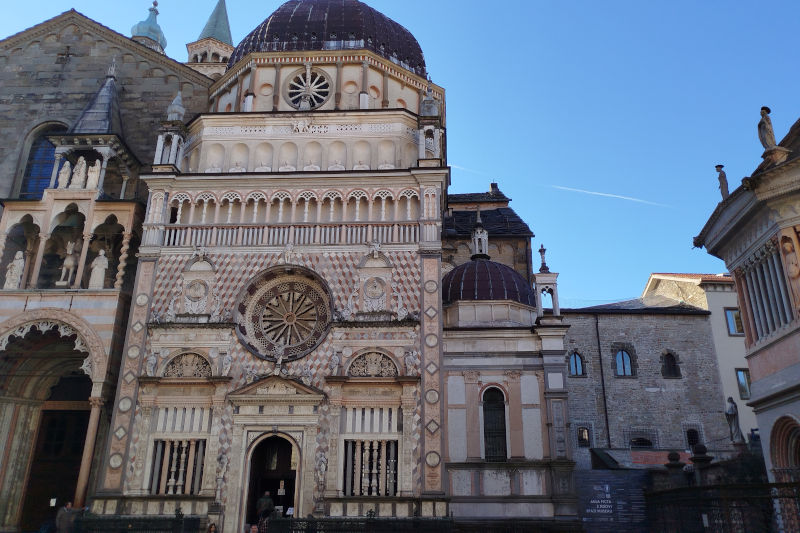
Via Colleoni: the main street of the Upper Town
From Piazza Vecchia begins Via Bartolomeo Colleoni, the main axis of the Upper Town and one of the liveliest places in the historic center.
Lined with shops, artisan stores, and historic venues, it is the natural route connecting the main points of interest all the way to Colle Aperto.
Walking along it allows visitors not only to move quickly from one attraction to another, but also to experience the everyday atmosphere of the city among views, courtyards, and medieval façades.
Piazza della Cittadella
Coming from Via Colleoni, visitors reach Piazza della Cittadella through the scenic Torre della Campanella. This square was once an ancient fortified Visconti area.
Today it hosts several city museums and is recognizable for its medieval arcades and porticoes, which create a more intimate atmosphere compared to the city’s larger squares.
The Bergamo Cathedral
The Bergamo Cathedral, now dedicated to Saint Alexander, patron saint of the city, was once a place of worship dedicated to Saint Vincent. It also overlooks Piazza del Duomo.
Built starting in the 15th century and repeatedly modified over the centuries, it features a 19th-century Neoclassical façade contrasting with the richly decorated Baroque interior.
Inside, some elements deserve a closer look:
- the altarpiece by Giambattista Tiepolo depicting the martyrdom of Saint Alexander
- the bright dome, creating a strong contrast with the gilded decorations of the aisles
- the crypt, where the relics of the patron saint are preserved
The visit is rather quick (around 15–20 minutes) and integrates perfectly with that of the neighboring basilica. It is a more intimate and less crowded space than the Basilica of Santa Maria Maggiore, ideal for a short yet meaningful stop during the itinerary. 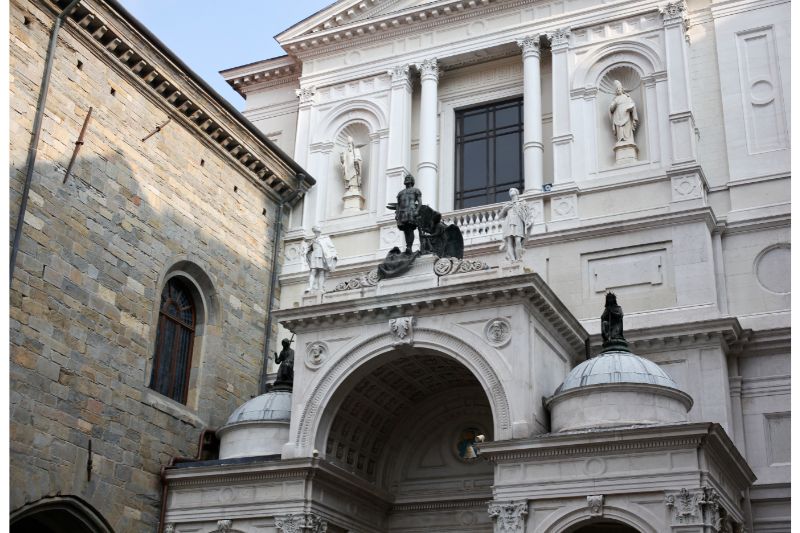
The Venetian Walls: UNESCO World Heritage Site
The Venetian Walls of Bergamo are among the most intact Renaissance fortification systems in Europe and have been part of the UNESCO World Heritage Site since 2017.
Built by the Republic of Venice between 1561 and 1588, they extend for approximately 6 km and include 14 bastions, 4 monumental gates, and long walkable sections.
Walking along them is one of the easiest ways to understand the structure and defensive history of the city, while also enjoying some of the widest panoramic views of Bergamo.
Along the route, visitors encounter:
- Porta San Giacomo, the most scenic gate, built in white marble and overlooking the plain
- the panoramic bastions, easily accessible and ideal for stopping along the route
- the San Giovanni cannon emplacement and its spectacular sunset viewpoint
- the walkways along the wall perimeter, connecting the different historic gates
- the stretch between Porta Sant’Agostino and Porta San Giacomo, among the most pleasant for its variety of views
The complete walk requires approximately 1.5–2 hours, although even a shorter section is enough to appreciate its value. It is a route suitable for everyone, with some moderately sloped sections and clear signage, perfect to include between visits in the historic center. 
The Rocca and the Remembrance Park
Built by the Scaligeri in the 14th century and later expanded by the Visconti and the Venetians, the Rocca of Bergamo dominates the hill of San Eufemia, just a few minutes on foot from Piazza Vecchia. Its elevated position makes it one of the most interesting strategic viewpoints for understanding the city’s defensive structure.
Today it houses the Museum of the Risorgimento and Contemporary Age, featuring a collection documenting the city’s history from the Unification of Italy onward. However, even without visiting the museum, the Rocca is worth a stop for what it offers outdoors.
In particular:
- the Remembrance Park, a panoramic tree-lined garden dedicated to war victims
- the bastions and walls, from which the relationship between the Upper Town and Lower Town can clearly be observed
- the 360-degree panoramic viewpoints, among the widest and most accessible in the area
Access to the park is free, and the visit takes around 20–30 minutes. It is an ideal stop for a break during the itinerary, especially during the middle hours of the day, when sunlight illuminates the plain and surrounding hills. 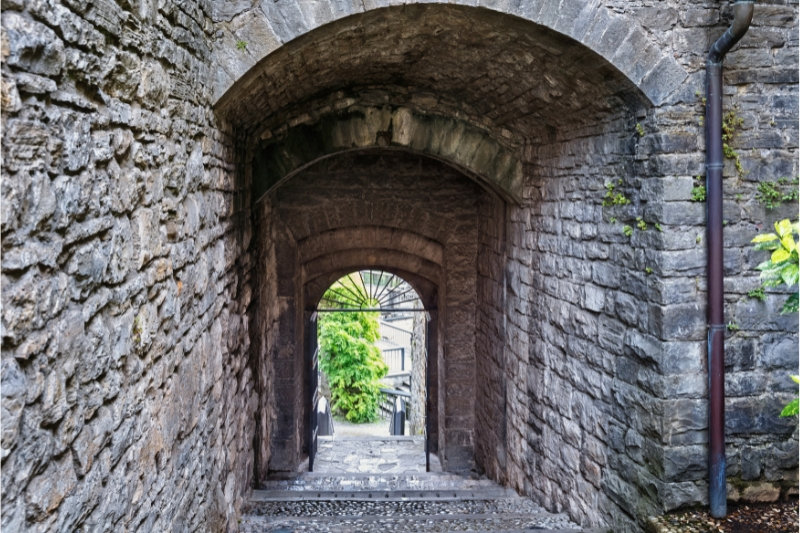
The Teatro Sociale and Donizetti’s Birthplace
Bergamo is the birthplace of Gaetano Donizetti, one of the leading figures of 19th-century Italian opera. In the Upper Town stands the Teatro Sociale, inaugurated in 1791 and today home to part of the Donizetti Opera Festival, dedicated to rediscovering his works.
Not far away, on Via Borgo Canale, is the Birthplace of Gaetano Donizetti, now transformed into a museum. The visit allows guests to retrace the composer’s life and artistic journey through documents, scores, and original objects, in a setting that vividly recreates the atmosphere of 19th-century Bergamo.
Panoramic Viewpoints and walks: from San Vigilio to the Sentiero dei Vasi
San Vigilio: Bergamo’s Highest viewpoint
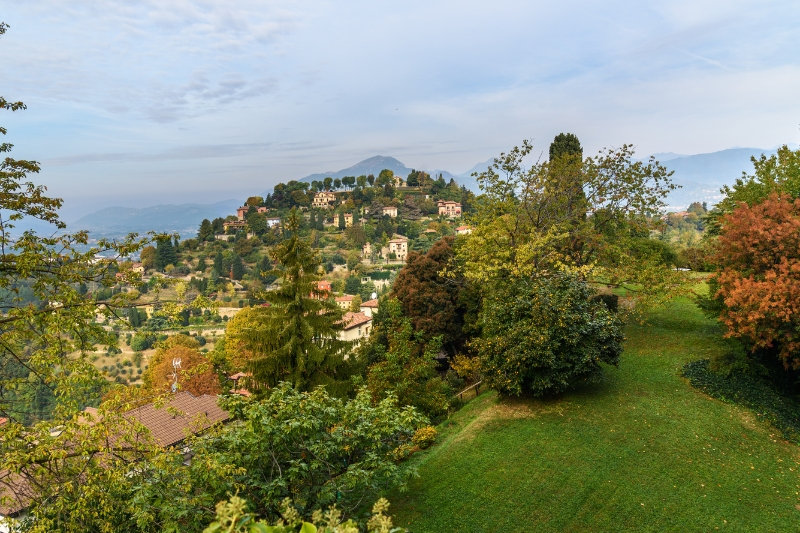
The Hill of San Vigilio can be reached from the Upper Town via a funicular departing from Colle Aperto, with just a few minutes of ascent. At the top stands the Castle of San Vigilio (12th century), whose gardens are open to the public and offer one of the most complete viewpoints over the Upper Town, the Po Valley, and, on clear days, the Alpine arc.
San Vigilio is suitable for all kinds of visitors: the funicular removes any difficulty of access, and 30–45 minutes are enough to enjoy the panorama and the atmosphere of the hilltop.
Those who prefer walking can also reach it on foot via the steep Via della Ripa, in approximately 20–25 minutes from Colle Aperto.
Sentiero dei Vasi
The Sentiero dei Vasi is one of Bergamo’s most charming walks, a route immersed in the greenery of the hills surrounding the Upper Town. The trail, easy and suitable for everyone (a decent level of fitness and appropriate clothing are recommended), crosses woods, small hamlets, and beautiful panoramic viewpoints, offering unique views over the valleys and the Prealps.
Along the path visitors also encounter the remains of the ancient Acquedotto dei Vasi, considered the city’s oldest aqueduct and probably dating back to Roman times. Ideal for a relaxing walk in nature, the trail develops within the Parco dei Colli di Bergamo, among history, silence, and truly fascinating landscapes.
Astino Valley
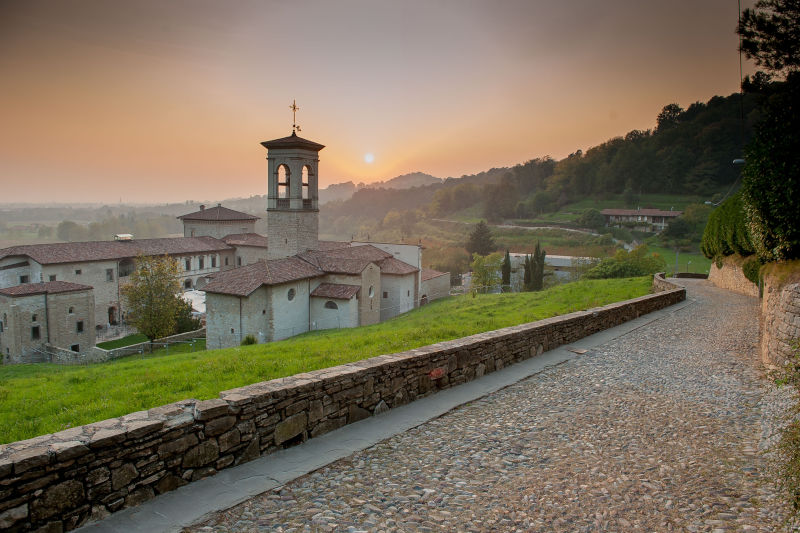
A short distance from the Upper Town, reachable on foot or by car in about 15–20 minutes, the Astino Valley is a small agricultural valley that has preserved its rural character intact. The Benedictine Monastery of Astino, founded in the 12th century, has been restored and today hosts cultural events and a botanical garden.
The valley is part of the Parco dei Colli di Bergamo and is ideal for a peaceful walk away from the tourist crowds. During the summer months, it becomes a small green paradise where visitors can slow down the pace of their trip and experience a different atmosphere from that of the historic center.
Exploring Bergamo Alta by Tuk Tuk
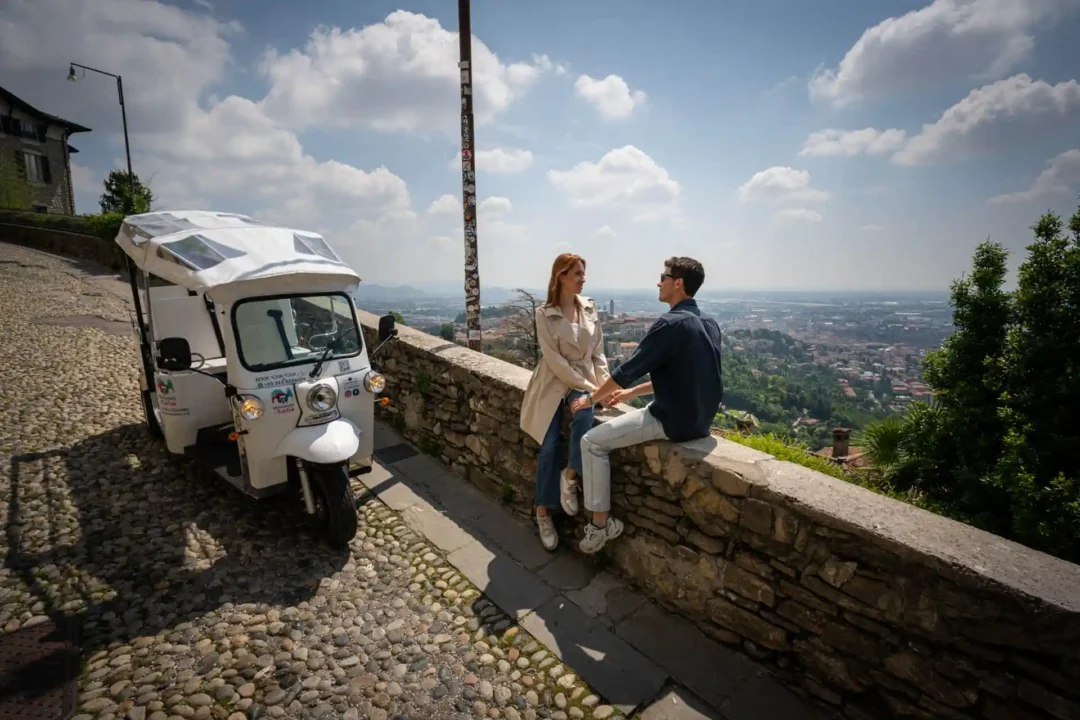
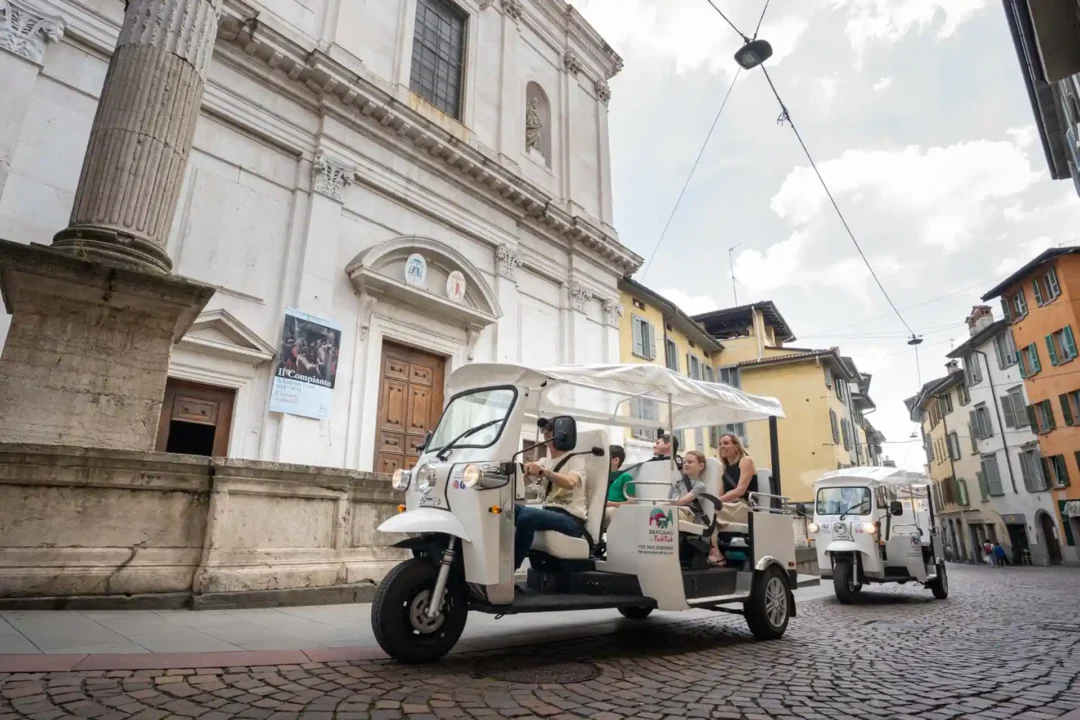
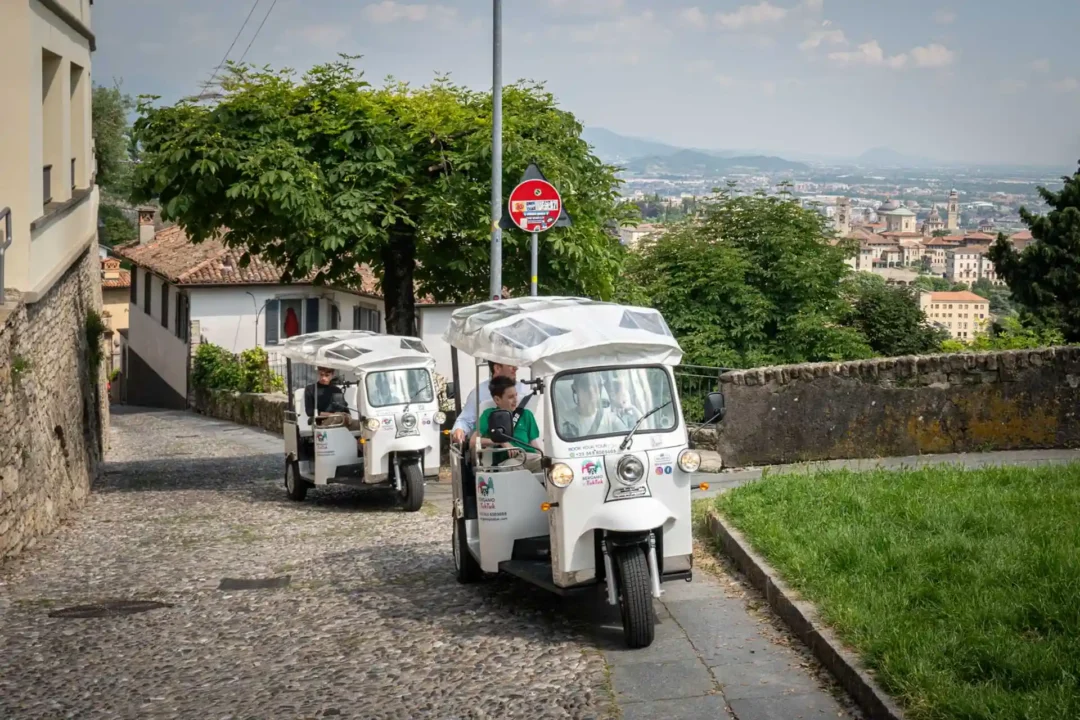
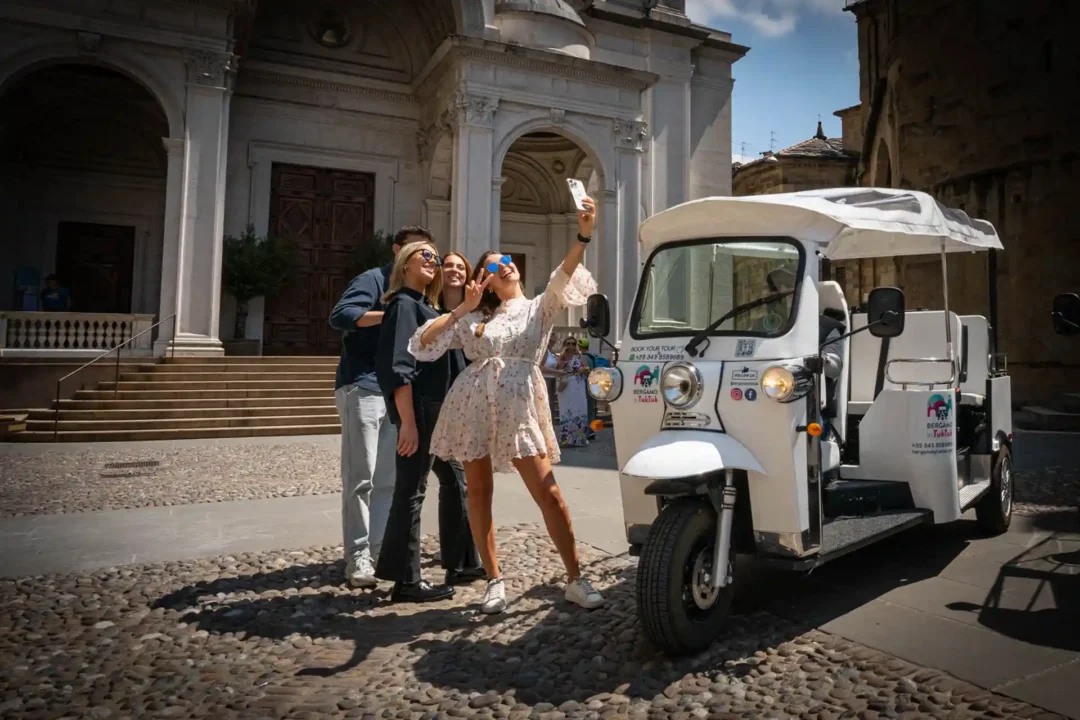
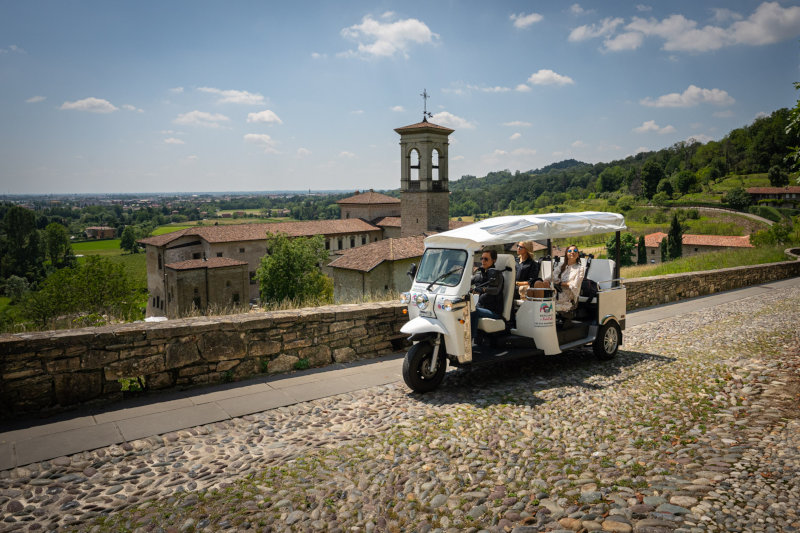
For those who want to optimize their time or avoid the elevation changes between different stops, tuk tuk tours can be a practical solution while visiting Bergamo Alta. They are especially useful for quickly connecting places such as the Rocca of Bergamo, the Venetian Walls, and the hill of San Vigilio, which require more time when explored entirely on foot.
Bergamo by Tuk Tuk offers guided itineraries that allow visitors to move comfortably and quickly between the main attractions and panoramic viewpoints, without having to plan every transfer.
It is a particularly appreciated option for those visiting Bergamo with children, for people with reduced mobility, or for travelers who prefer focusing on sightseeing while minimizing walking.
What to See in Bergamo by Tuk Tuk – Astino Valley
How to organize your visit to Bergamo Alta
Visiting Bergamo Alta generally requires a full day for those who want to cover the main attractions, the walks along the walls, and a stop in San Vigilio. With half a day available, it is possible to focus on the historic center — Piazza Vecchia, the basilica, and the Colleoni Chapel — leaving the panoramic walks for a future visit.
The most logical itinerary starts from the funicular railway climbing from the Lower Town (Mercato delle Scarpe stop), continues toward Piazza Vecchia and Piazza del Duomo, rises to the Rocca and the walls, and ends with the funicular to San Vigilio. Those wishing to explore the Astino Valley or the Sentiero dei Vasi should add at least an extra hour to the itinerary.
The atmosphere of Bergamo Alta changes dramatically between the early morning, when the streets are almost deserted and the medieval stone warms under the soft light, and the afternoon, when tourists and locals mingle in the squares and traditional taverns.
Both moments have their charm, but those wishing to take photographs and enjoy the spaces in tranquility should favor the early hours of the day.
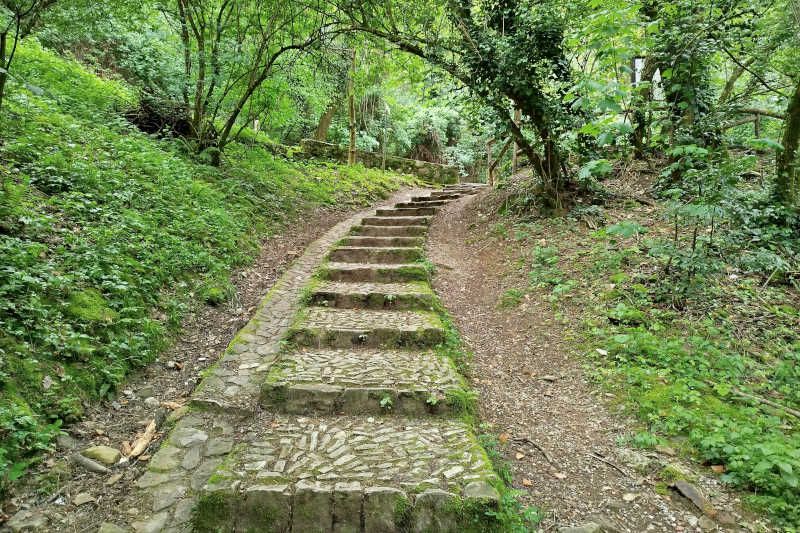
Sentiero dei Vasi Final Section
FAQ
What can you see in Bergamo Alta in half a day?
With 3–4 hours available, it is possible to visit Piazza Vecchia, the Palazzo della Ragione, the Basilica of Santa Maria Maggiore, and the Colleoni Chapel, as well as take a short walk along the Venetian Walls. This is the richest core of the Upper Town, all concentrated within just a few minutes on foot.
What can you see in Bergamo Alta in one day?
With a full day available, visitors can cover all the main attractions: the historic center, the Rocca, the walls, and the hill of San Vigilio reached by funicular. Those wishing to add a quieter walk can include the Astino Valley or the Sentiero dei Vasi in the afternoon.
What can you see in Bergamo Alta for free?
Many of Bergamo Alta’s most beautiful places can be visited free of charge: the Basilica of Santa Maria Maggiore, the Colleoni Chapel, the Venetian Walls, the Remembrance Park, and the Rocca gardens. Walking along the walls and through the historic center is also completely free. The funicular to San Vigilio and the one connecting the Lower Town to the Upper Town, however, require a ticket.
What can you see in Bergamo Alta in one afternoon?
With a free afternoon (from 2:00 PM onward), visitors can comfortably explore Piazza Vecchia, the Colleoni Chapel, and head up to San Vigilio for sunset, which is particularly evocative from above. Alternatively, a walk along the walls to Porta San Giacomo followed by a stop at one of the local taverns is an excellent way to experience the city at a slower pace.
Where to eat in Bergamo Alta?
Bergamo Alta offers several options for every budget, from traditional taverns where visitors can taste polenta taragna and Bergamo-style casoncelli to the cafés of Piazza Vecchia for an aperitivo. For a detailed guide with addresses and practical tips, read the article dedicated to where to eat in Bergamo Alta.
How to get to Bergamo Alta?
The Upper Town can be reached from the Lower Town by our Tuk Tuk, funicular railway (stop at Piazza Mercato delle Scarpe) or on foot along Via della Noca. Those arriving by car can park at the Porta Nuova parking areas or at Piazzale della Malpensata and then continue by funicular. For all details on transportation options, read the complete guide on how to get to Bergamo Alta.
More Information
- Pizzerias in Bergamo: where to eat pizza in the Upper and Lower Town
- The Circolino of the Upper Town
- Where to Park in Bergamo: complete guide to avoiding stress
- Historic Residences in Bergamo and Surroundings
- Sanctuary of the Blessed Virgin of the Chestnut Tree: a hidden gem among the Hills of Bergamo
- Romantic Weekend in Bergamo: experiences to enjoy as a couple
Itineraries, experiences and a local soul: this is the Bergamo that we want to tell you about!