
19 January 2024
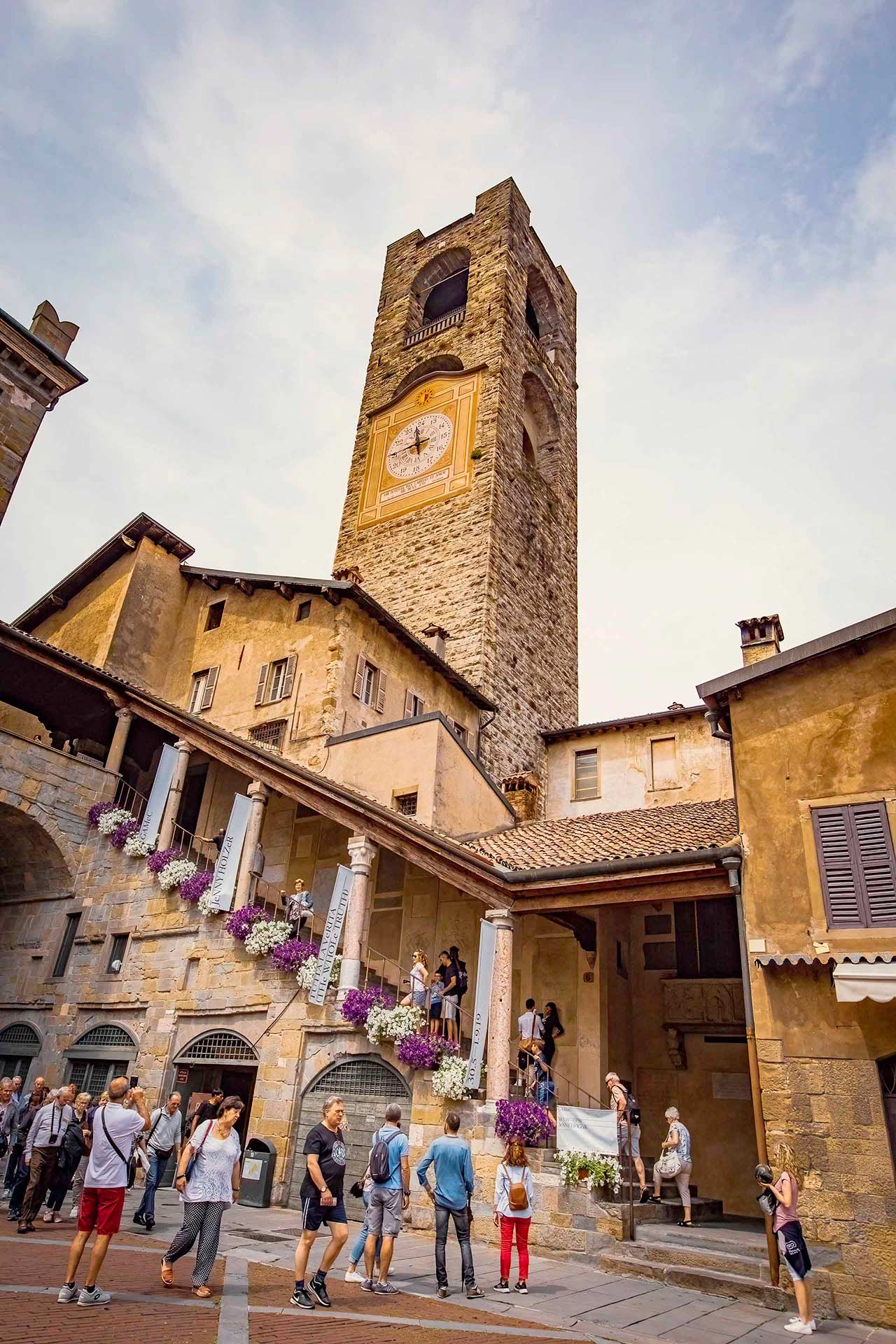
At the beating heart of Piazza Vecchia, surrounded by the Venetian walls that embrace Bergamo Alta, the majestic Torre Civica rises proudly. The people of Bergamo affectionately call it the “Campanone” or, in the local Bergamasco dialect, “ol campanù” — a nickname that recalls the presence of the imposing bell which, from its summit, has marked the passage of time in the city for centuries.
This monument represents one of the most authentic symbols of Bergamo’s identity and is an unmissable stop for anyone wishing to immerse themselves in the history and culture of this beautiful Lombard city.
The medieval origins of the Campanone
The history of Bergamo’s medieval tower has its roots in a period of intense rivalry between noble families and political factions. Built between the 11th and 12th centuries, the structure was originally conceived as a tower house owned by the Suardi family, one of the most influential dynasties of the time, aligned with the Ghibelline faction.
At that time, Bergamo was known as the “city of a hundred towers“: wealthy families competed in building ever taller towers, tangible symbols of power and prestige. The higher a tower rose toward the sky, the greater the authority its owners gained in the eyes of the citizens.
Over the centuries, the Campanone underwent numerous transformations and changes in function. During the 14th century, it housed the city prisons, becoming a place of detention for those who violated municipal laws.
With the advent of the communal era, the tower was acquired by the municipality of Bergamo and its role changed radically — from a symbol of private power to an emblem of public authority. It was during this period that the bells were installed, giving the tower its current name and beginning to mark the rhythms of city life.
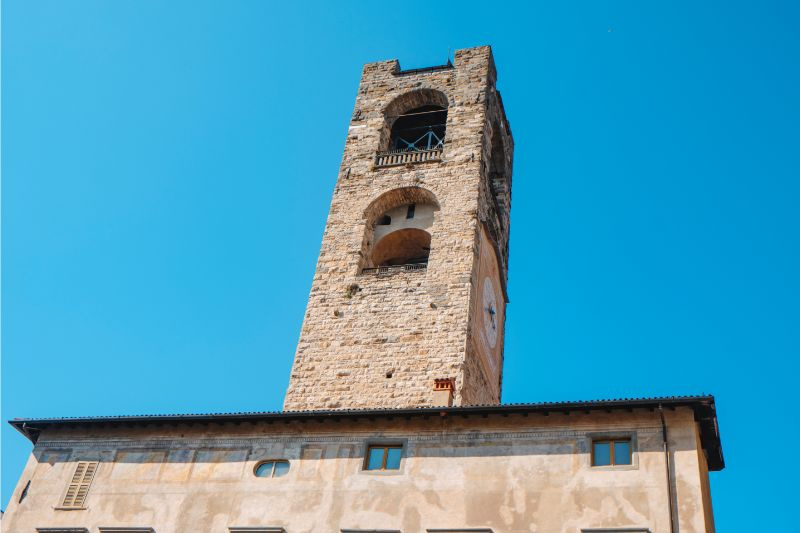
The architecture and features of the Tower
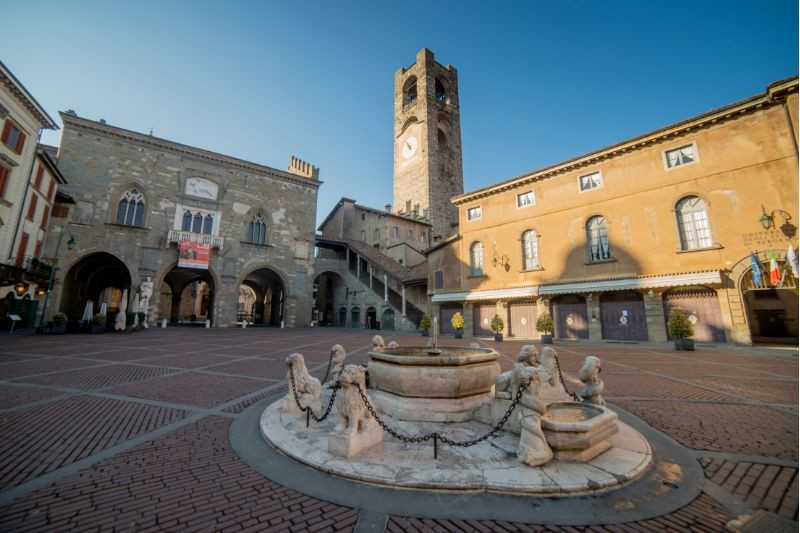
While strolling through Piazza Vecchia, one’s gaze is inevitably drawn to the imposing silhouette of the Campanone rising against the sky. The tower occupies a strategic position, acting as a link between two important historic buildings: the Palazzo della Ragione and the Palazzo del Podestà.
The architectural style is distinctly medieval, characterized by robust stonework and elegant arches that testify to the construction skills of the era.
How tall is the Campanone of Bergamo?
The current height of the Campanone reaches 52.76 meters, making it the tallest tower in the entire city of Bergamo. Originally, however, its dimensions were quite different: the initial structure stood 37 meters tall.
In 1550, the municipality approved a significant raising of the tower to accommodate a new and larger bell chamber, bringing the structure to the dimensions we admire today.
In the following centuries, further minor expansions and structural modifications refined the tower’s appearance, including the installation of an elevator that made the visit accessible to everyone.
The bell concert
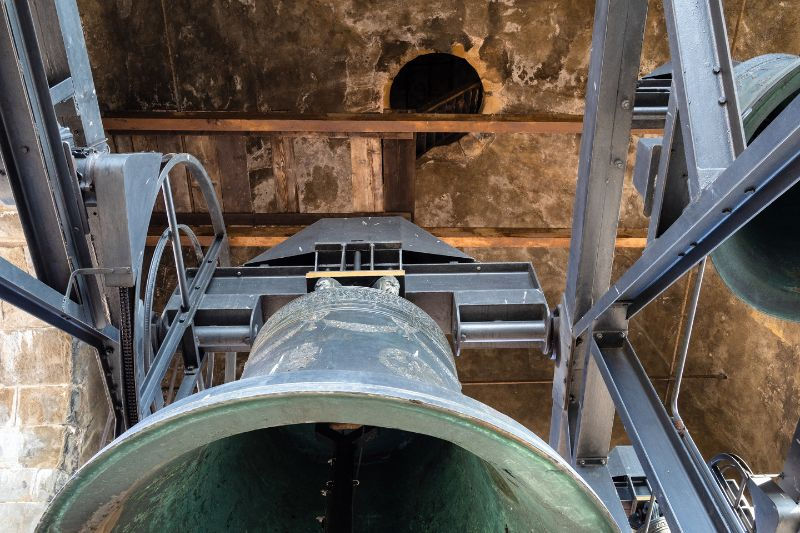
Inside the tower is preserved a precious concert of three bells, each with its own unique history and characteristics. The most imposing is the one that gave the entire structure its name: the Campanone itself.
Cast in 1656 by the Veronese master Bartolomeo Pisenti, this bell is still today the largest in all of Lombardy. With a diameter of 2.07 meters and an estimated weight of about 5,580 kilograms, it represents a true masterpiece of bell-making art. The clapper alone weighs about 300 kilograms.
The casting of this monumental bronze was far from simple and involved considerable technical and practical challenges. The first attempt, in 1652, ended tragically when the mold burst during pouring. The second attempt, the following year, initially seemed successful, but the bell cracked just a few months after installation.
Only the third attempt, carried out on March 23, 1656, was definitive. The casting took place directly in Piazza Duomo, in the immediate vicinity of the tower. Even today, visitors to the square can spot the engraved circle in the pavement marking the exact spot where this extraordinary bell was cast.
The other two bells complete the ensemble: the middle bell, dating back to 1949, was created by Bergamasco bell founder Angelo Ottolina, who managed to obtain the mold before the original 1653 bell was requisitioned and destroyed during World War II.
The smallest bell, but also the oldest of the set, was cast in 1474 by Gasparino da Vicenza and weighs about 480 kilograms. All the bells are now equipped with electrified systems that allow both traditional swinging and electric striking, ensuring the continuity of the city’s sound traditions.
When does the Campanone of Bergamo ring?
The sound of the Campanone accompanies several moments of city life. In addition to marking the hours throughout the day, the main bell rings on particularly significant occasions for the Bergamo community.
It sounds when the City Council convenes, during the solemn Corpus Christi procession, and on August 25th during the concert of all the city’s bell towers organized by the Federazione Campanari Bergamaschi, in preparation for the feast of the patron saint, Saint Alexander, celebrated the following day.
The famous 100 tolls
What truly makes the Campanone unique is the tradition of the hundred evening tolls. Every evening, precisely at 10:00 PM, the great bell strikes one hundred times, echoing throughout the entire city.
This custom dates back to the period of Venetian rule, when the tolls announced the imminent closing of the four gates leading into Bergamo Alta and the beginning of the night curfew. Although the gates have not closed for centuries, the people of Bergamo have chosen to keep this tradition alive as a lasting reminder of their history and a defining element of the city’s identity.
For visitors in Piazza Vecchia during the evening hours, witnessing the hundred tolls is a moving and evocative experience, a moment when past and present blend into a single melody.
Visiting the Campanone: steps and panorama
One of the most fascinating experiences Bergamo has to offer is undoubtedly climbing to the top of the Civic Tower.
From the summit, visitors enjoy a breathtaking 360-degree panoramic view over Bergamo Alta with its historic walls, Bergamo Bassa with its modern urban fabric, the Po Valley stretching southward, and the majestic Orobie Pre-Alps rising to the north.
How many steps does the Campanone of Bergamo Alta have?
To reach the top of this monument in Bergamo Alta, visitors must tackle a climb of 230 steps. This ascent allows for a gradual appreciation of the tower’s internal structure and the satisfaction of “earning” the final view through a pleasant physical activity.
However, for those who prefer a more comfortable ascent or have mobility difficulties, a modern elevator installed in 1960 is available, taking visitors up to the first terrace and making the visit accessible to people of all ages and physical conditions. In 2007, a subsequent restyling made the elevator fully panoramic, enclosing it in transparent glass.
The introduction of this contemporary element has not compromised the historical integrity of the structure; on the contrary, it has allowed a wider audience to enjoy the beauty the tower has to offer.
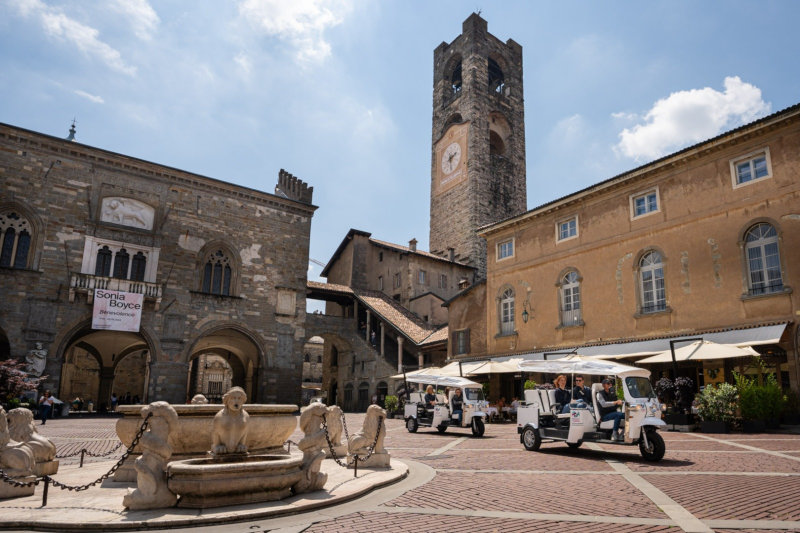
Tuk Tuk Tour in Piazza Vecchia with a view of the Campanone
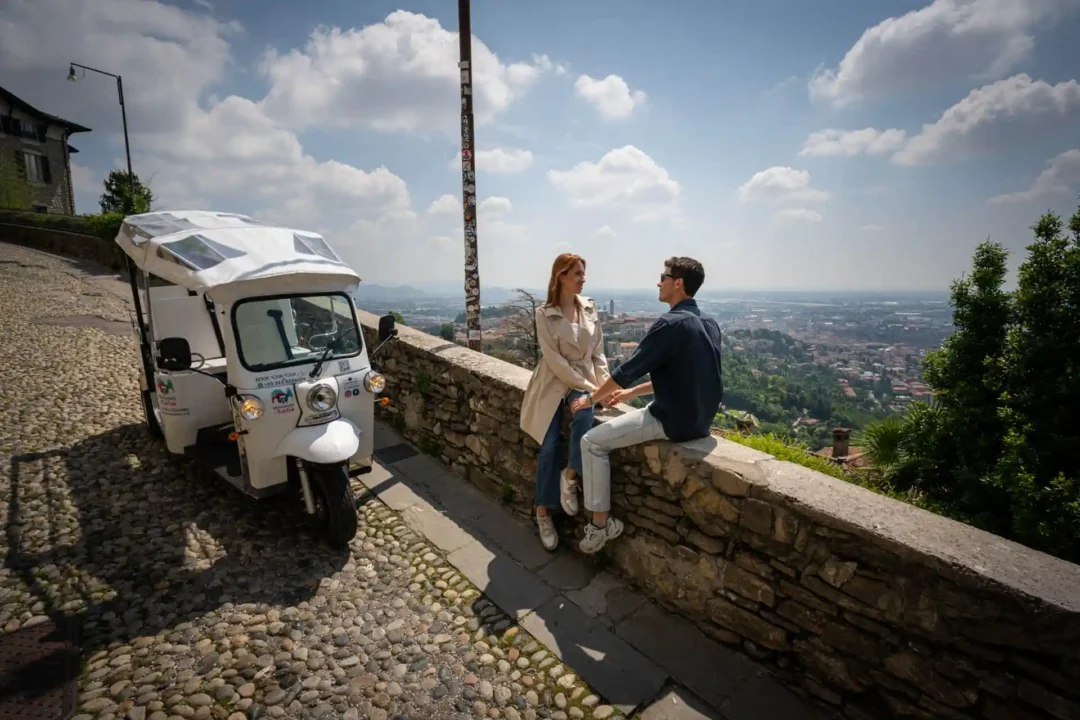
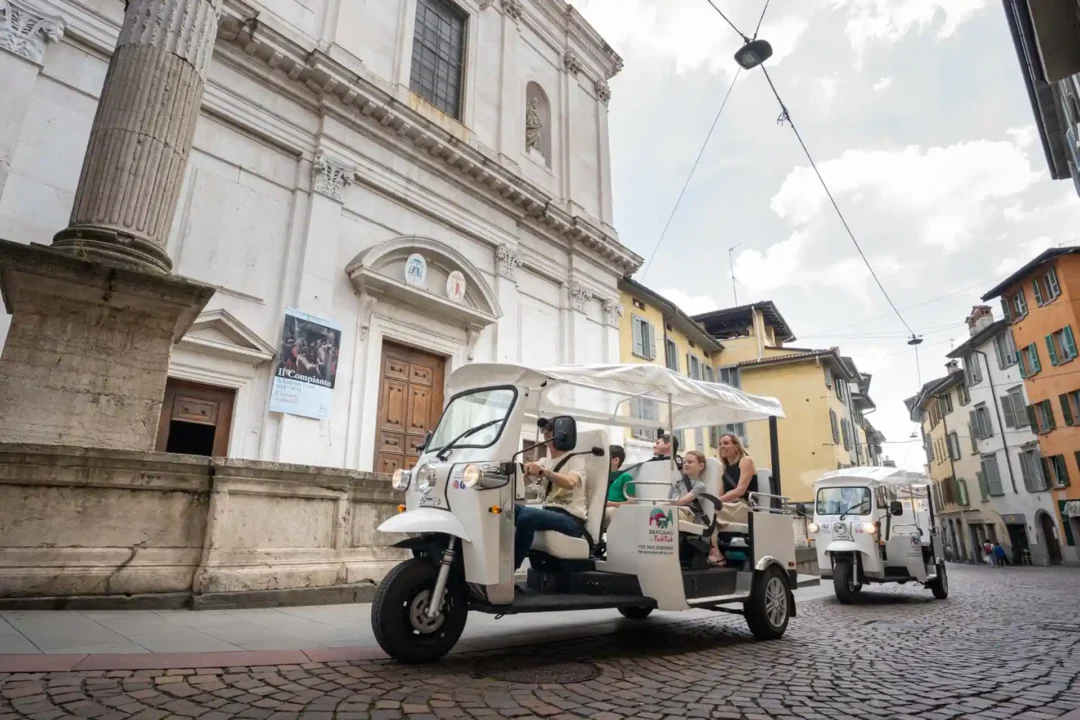
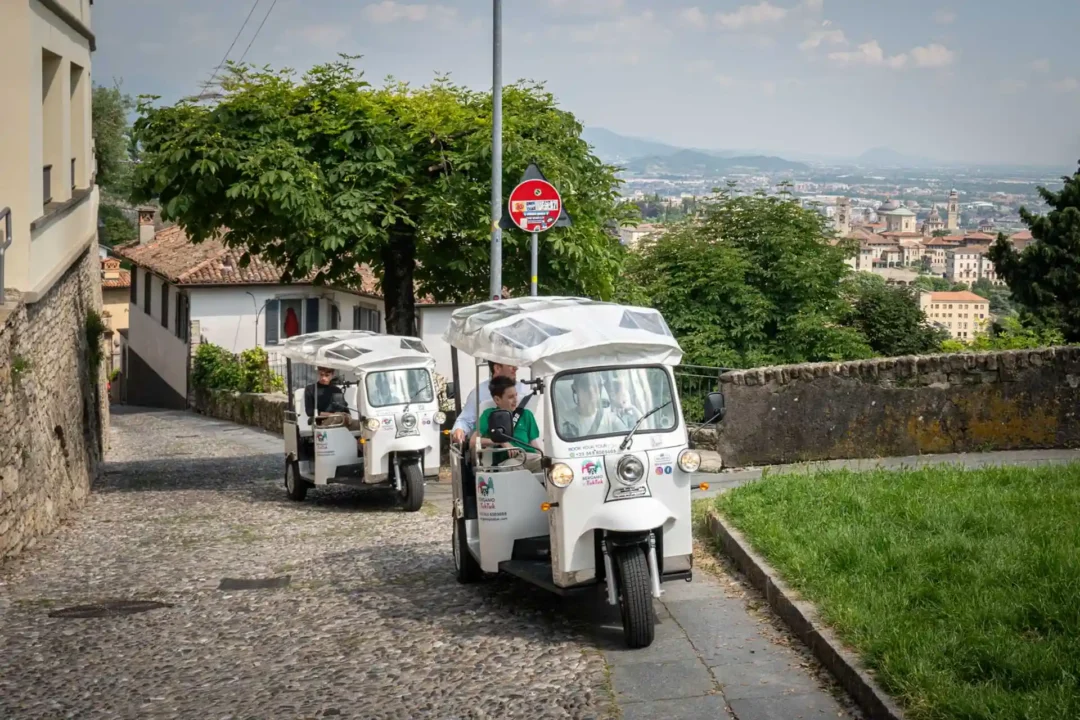
After discovering the fascinating history of the Campanone, why not experience Bergamo in an even more engaging way? Aboard the colorful tuk tuks of Bergamo By Tuk Tuk, you can explore the iconic sites of the Upper and Lower City in a fun, eco-friendly, and effortless way.
From the ancient Venetian walls to Piazza Vecchia, passing through hidden corners and breathtaking views, our Bergamo Tours are perfect for those who want to feel the authentic rhythm of the city, guided by experienced local guides. Discover our itineraries and make your visit unforgettable!
What to see nearby
The Campanone’s central location in Piazza Vecchia makes it the ideal starting point for exploring the wonders of Bergamo Alta.
Just steps from the tower stands the Palazzo della Ragione, one of the oldest municipal buildings in Italy, whose elegant loggia overlooking the square is a remarkable example of medieval civic architecture.
Continuing the exploration, visitors encounter the Bergamo Cathedral and the Basilica of Santa Maria Maggiore, masterpieces of sacred art that house treasures of inestimable value.
A visit to the Colleoni Chapel is not to be missed — an authentic Renaissance gem designed by Amadeo and adorned with splendid frescoes by Tiepolo.
For those who enjoy strolling, Via Colleoni (affectionately known as “Corsarola” by locals) offers a charming route lined with historic shops, noble palaces, and picturesque views.
The Cittadella of Bergamo, with its museums dedicated to natural history and archaeology, is another cultural stop of great interest.
Finally, the Venetian Walls, a UNESCO World Heritage Site since 2017, encircle the entire Upper City, offering panoramic walks and a unique perspective over Bergamo.
A gastronomic curiosity: Lambrusco Campanone
We conclude this journey through the Civic Tower with a curiosity that blends history and wine tradition. Anyone enjoying a glass of Lambrusco in Bergamo or elsewhere might come across a particular label called “Il Campanone“. But what connection does this wine have with the Bergamasco tower? In reality, none directly.
Lambrusco Campanone actually takes its name from the bell tower of the Rocca dei Gonzaga in Novellara, a town in the province of Reggio Emilia. Produced by the Lombardini Winery, this Reggiano DOC wine is the flagship of local Emilian production.
The distinctive slender bottle is inspired by the shape of the Novellara bell tower, serving as a tribute to the structure that dominates the town. It is therefore a case of homonymy, demonstrating how in different Italian cities civic towers and bell towers have often acquired the affectionate nickname “Campanone”, becoming identity symbols for their respective communities.
Despite this curious coincidence of names, a visit to the Campanone of Bergamo remains a unique and unforgettable experience, capable of bringing centuries of history to life through stone, bronze, and the solemn sound of its tolls, which have accompanied the lives of the people of Bergamo for nearly four hundred years.
Itineraries, experiences and a local soul: this is the Bergamo that we want to tell you about!